
دليل نوم المولود الجديد للأهل في أستراليا
كم ينبغي أن ينام طفلك؟ فترات الاستيقاظ والقيلولات حسب العمر، والنوم الآمن، والخلط بين النهار والليل، وأسباب تراجع النوم، في دليل عملي مبني على الإرشادات الصحية الأسترالية.
لا يخبرك أحد بهذا قبل وصول الطفل: ليس للمولود الجديد جدول نوم حقيقي. بل لديه فوضى نوم، أي فترات قصيرة من النوم المتقطّع بين الرضعات، وتغيير الحفاض، والتحديق في مروحة السقف.
إذا كنت تقرأ هذا في الساعة 3 صباحًا وتتساءل هل نوم طفلك طبيعي، فالجواب المختصر: على الأرجح نعم. وإليك الجواب الأطول: كم ينام الأطفال عادةً، وكم يمكنهم البقاء مستيقظين، وكيف تبدو القيلولات مع نموهم، وما الذي يحدث فعلًا عندما يضطرب النوم لمدة أسبوع.
كم يحتاج الأطفال إلى النوم فعلًا؟
بحسب Raising Children Network(يُفتح في نافذة جديدة) (المرجع الوطني لتربية الأطفال في أستراليا)، ينام الأطفال كثيرًا، لكن ليس أبدًا في الوقت الذي تريده.
| العمر | مجموع النوم (24 ساعة) | أطول فترة نوم | القيلولات |
|---|---|---|---|
| 0–3 أشهر | 14–17 ساعة | 2–4 ساعات | لا نمط، ينام بين الرضعات |
| 3–6 أشهر | 12–15 ساعة | 4–6 ساعات | 3–4 قيلولات يوميًا |
| 6–12 شهرًا | 12–14 ساعة | 6–10 ساعات | 2–3 قيلولات يوميًا |
هذه متوسطات. وطفلك لم يقرأ هذا الجدول.
في الأسابيع الأولى بعد الولادة، يأتي النوم بين الرضعات التي تتكرر كل 2 إلى 3 ساعات تقريبًا، ليلًا ونهارًا. ويشرح دليلنا عن جدول رضاعة المولود الجديد الرضعات الليلية ومتى توقظ الطفل النعسان.
أما للأطفال الأكبر سنًا، فتضع هيئات طب النوم نطاقًا أوسع وأكثر مرونة:
American Academy of Sleep Medicineينبغي أن ينام الرضّع بعمر 4–12 شهرًا من 12 إلى 16 ساعة كل 24 ساعة، بما في ذلك القيلولات. وتختلف احتياجات النوم من طفل إلى آخر، لذلك قد يكون فارق ساعة أو ساعتين زيادةً أو نقصانًا طبيعيًا تمامًا.
وأنفع فكرة في كل هذا: يشير Raising Children Network إلى أن الطفل قد يكون بخير وهو ينام أكثر أو أقل من طفل آخر في العمر نفسه. فنمط طفلك الخاص أهم من أي جدول. والمتوسطات وسيلة للاطمئنان، لا هدف تلاحقه.
وأمر آخر يتعلّمه الأهل الجدد جميعًا بالطريقة الصعبة: لا يستطيع المولود الجديد التمييز بين النهار والليل. فساعته البيولوجية لا تتطور فعليًا قبل عمر 6–8 أسابيع تقريبًا. وحتى ذلك الحين، كل الساعات عنده سواء.
النوم الآمن: الإرشادات الأسترالية
تضع Red Nose Australia(يُفتح في نافذة جديدة) (المعروفة سابقًا باسم SIDS and Kids) الإرشادات الوطنية للنوم الآمن. وهي الإرشادات التي ستسألك عنها ممرضة صحة الطفل، وتنطبق على كل نومة، بما فيها القيلولات:
- نوّم طفلك على ظهره، في كل نومة، ليلًا ونهارًا
- أبقِ وجهه ورأسه مكشوفين، بلا بطانيات غير مثبّتة أو وسائد أو مصدات أو ألعاب في سرير الطفل
- أبقِ طفلك بعيدًا عن الدخان، قبل الولادة وبعدها
- بيئة نوم آمنة: مرتبة صلبة ومسطّحة في سرير آمن يطابق المعايير الأسترالية (AS/NZS 2172)
- نوّم طفلك في مكان نوم آمن خاص به، في الغرفة نفسها معك خلال أول 6–12 شهرًا
- أرضعي طفلك رضاعة طبيعية: إن استطعتِ، فالرضاعة الطبيعية تقلّل خطر موت الرضيع المفاجئ
تستند هذه الإرشادات إلى عقود من البحث، وقد خفّضت معدلات متلازمة موت الرضيع المفاجئ (SIDS) في أستراليا بدرجة كبيرة. ويستحق الأمر الالتزام بها حتى عندما يعترض طفلك على النوم على ظهره (وسيعترض).
وإذا كان في البيت طفل صغير (من سنة إلى 3 سنوات) أيضًا، فاجعل مكان نوم المولود منفصلًا عن مكان نومه. ويشرح دليلنا عن طفلين دون سن الثانية النوم الآمن ونقل الطفل الصغير من سريره.
كيف تقرأ إشارات النوم لدى طفلك
يعطي الأطفال إشارات عندما يبدأ التعب. ويؤكد Raising Children Network(يُفتح في نافذة جديدة) بوضوح أن إشارات التعب، لا الساعة، هي أفضل دليل على الوقت الذي يكون فيه الطفل مستعدًا للنوم. والمهم أن تلتقطها قبل أن ينهار طفلك من فرط التعب:
الإشارات المبكرة (تصرّف الآن):
- التثاؤب
- التحديق في الفراغ
- حركات مفاجئة وغير منتظمة في الذراعين والساقين
- العبوس أو تقطيب الحاجبين
- قبض اليدين
الإشارات المتأخرة (على الأرجح فاتتك الفرصة):
- البكاء
- تقوّس الظهر
- صعوبة التهدئة
قد لا تتجاوز المدة بين «أنا متعب» و«أنا متعب جدًا لدرجة أنني لا أستطيع النوم» 10 دقائق لدى المولود الجديد. ويبكي الأطفال أيضًا لأسباب غير التعب، مثل الجوع أو الانزعاج أو المرض أو مجرد الرغبة في حضن، لذا اقرأ الإشارات إلى جانب الساعة، ولا تجعل الساعة تحلّ محل طفلك.
فترات الاستيقاظ حسب العمر: كم يمكن أن يبقى المولود الجديد مستيقظًا؟
يستطيع المولود الجديد البقاء مستيقظًا نحو 1 إلى 2 ساعة قبل أن تظهر إشارات التعب، وتشمل هذه المدة الرضعة. بعض الأطفال يصبحون مستعدين للنوم بعد 1 إلى 1.5 ساعة، وآخرون يبقون هادئين راضين ساعتين أو أكثر. وتمتد فترة الاستيقاظ إلى 2 إلى 3 ساعات بحلول عمر 6 أشهر، وإلى 3 إلى 4 ساعات بحلول عيد ميلاده الأول.
| العمر | فترة الاستيقاظ المعتادة | القيلولات المعتادة |
|---|---|---|
| من الولادة حتى 6 أسابيع | من 1 إلى 2 ساعة، بما فيها الرضعة. بعض المواليد الجدد يتعبون بعد 1 إلى 1.5 ساعة | لا نمط بعد: من 6 إلى 8 نومات، مدة كل منها من 2 إلى 4 ساعات، موزّعة على النهار والليل |
| من 6 إلى 12 أسبوعًا | من 1 إلى 2.5 ساعة | من 3 إلى 4 قيلولات، مدة كل منها من 1 إلى 3 ساعات |
| من 3 إلى 5 أشهر | من 1.5 إلى 2 ساعة في عمر 3 أشهر، ومن 2 إلى 3 ساعات بحلول عمر 5 أشهر | من 2 إلى 3 قيلولات، تصل كل منها إلى ساعتين |
| من 6 إلى 8 أشهر | من 2 إلى 3 ساعات | من 2 إلى 3 قيلولات، مدة كل منها من 30 دقيقة إلى ساعتين |
| من 9 إلى 12 شهرًا | من 2.5 إلى 3.5 ساعة في عمر 9 إلى 10 أشهر، ومن 3 إلى 4 ساعات في عمر 11 إلى 12 شهرًا | قيلولتان، الأولى من 1 إلى 2 ساعة، والثانية من 1 إلى 1.5 ساعة |
هذه النطاقات مأخوذة من صفحات الروتين لدى Tresillian الخاصة بـالمواليد الجدد(يُفتح في نافذة جديدة)، وعمر 3 إلى 5 أشهر(يُفتح في نافذة جديدة)، وعمر 6 إلى 8 أشهر(يُفتح في نافذة جديدة)، وعمر 9 إلى 12 شهرًا(يُفتح في نافذة جديدة)، ومن صفحات Raising Children Network عن إشارات التعب(يُفتح في نافذة جديدة)، ونوم المولود الجديد(يُفتح في نافذة جديدة)، ونوم الطفل من 2 إلى 12 شهرًا(يُفتح في نافذة جديدة).
ثمة أمر يستحق أن تعرفه قبل أن تعلّق هذا الجدول على الثلاجة: الجهات الوطنية الأسترالية المعنية بالتربية لا تحدد فترات للاستيقاظ. يقول Raising Children Network(يُفتح في نافذة جديدة) إن المولود الجديد قد يتعب بعد 1 إلى 1.5 ساعة من استيقاظه، أو يبقى سعيدًا ساعتين أو أكثر، وإن الطفل بعمر 3 إلى 6 أشهر قد يتعب بعد 1.5 إلى 3 ساعات من الاستيقاظ. أما Pregnancy Birth and Baby(يُفتح في نافذة جديدة) فيتجاوز الأرقام تمامًا: ضع طفلك في السرير بمجرد أن تلاحظ إشارات التعب. فكلاهما يصف شكل التعب، لا ساعة تراقبها. أما شكل الجدول المرتّب فمصدره مستشارو النوم وتطبيقات التتبّع. وTresillian، وهي الخدمة الأسترالية الوحيدة لدعم الأهل في السنوات الأولى من عمر الطفل (early parenting service) التي تنشر فترات الاستيقاظ حسب العمر، تصفها بأنها متوسطات، وتطلب منك مع ذلك أن تستجيب لإشارات التعب لدى طفلك في كل نومة.
لذا تعامل مع الجدول على أنه دليل تقريبي، لا ساعة توقيت. ويشير QEC(يُفتح في نافذة جديدة) (The Queen Elizabeth Centre، وهي خدمة في ولاية فيكتوريا لدعم الأهل في السنوات الأولى من عمر الطفل) إلى أن الأطفال بعمر 6–12 شهرًا قد يتعبون بعد ساعتين إلى ثلاث ساعات من الاستيقاظ، ويذكر من إشارات التعب التشبّث والتذمّر والتململ أثناء الأكل. والنصيحة واحدة في كل عمر: راقب إشارات التعب هذه بدلًا من عدّ الدقائق بصرامة.
عمليًا، قد يكون الطفل بعمر أسبوعين مستعدًا للنوم مجددًا بعد ساعة أو نحوها من استيقاظه. وتشمل هذه الساعة الرضعة والتجشؤ وتغيير الحفاض، فما إن تنتهي من الثلاثة حتى يقترب موعد القيلولة من جديد. وفترة الاستيقاظ المعتادة لطفلك، كما تظهر في سجلات نومه على مدى أسبوعين تقريبًا، تتنبأ بموعد القيلولة التالية أفضل من أي صف في الجدول.
القيلولات حسب العمر
للنوم في النهار ألغازه الخاصة. فبحسب Raising Children Network(يُفتح في نافذة جديدة)، كثيرًا ما يظل الأطفال بعمر 6–12 شهرًا يأخذون 2–3 قيلولات نهارية تتراوح مدتها بين 30 دقيقة وساعتين، وهو نطاق واسع جدًا وكله طبيعي، ويقل عدد القيلولات تدريجيًا خلال السنة الأولى. ويصف QEC(يُفتح في نافذة جديدة) الأطفال بعمر 6–12 شهرًا بأنهم يبدؤون أخذ قيلولتين يوميًا تقريبًا، مدة كل منهما ساعة إلى ساعتين، وينام معظم الأطفال 10–14 ساعة على مدار اليوم الكامل.
بعض الأمور التي يفيد أن تعرفها حتى لا تقلق بلا داعٍ:
- القيلولات القصيرة طبيعية، خصوصًا في الأشهر الأولى. والقيلولة الواحدة التي تستمر 30 دقيقة ليست قيلولة «فاشلة».
- مجموع القيلولات أهم من أي قيلولة بمفردها. فالقيلولة الصباحية القصيرة كثيرًا ما يعوّضها ما يأتي لاحقًا في اليوم.
- الانتقال من 3 قيلولات إلى 2، ثم من 2 إلى 1، يحدث تدريجيًا وبشكل متعثّر، فتوقّع بضعة أسابيع صعبة حول كل انتقال.
لا يوجد جدول قيلولات واحد يناسب كل الأطفال. الجدول المفيد هو نمط طفلك أنت: متى يميل إلى القيلولة تقريبًا، وكم تستمر قيلولاته عادةً.
كيف تعالج الخلط بين النهار والليل
إذا كان مولودك الجديد ينام طوال النهار ويسهر طوال الليل كأنه في حفلة، فهذا طبيعي ومؤقت. ويمكنك مساعدة ساعته البيولوجية على التطور:
في النهار:
- افتح الستائر، ودع الضوء الطبيعي يدخل في أوقات الاستيقاظ
- اترك أصوات البيت المعتادة كما هي (لا داعي للمشي على أطراف أصابعك)
- اجعل الرضعات وقتًا اجتماعيًا: تحدّث إلى طفلك وانظر في عينيه
- اخرج من البيت، فحتى نزهة قصيرة تساعد على ضبط ساعته البيولوجية
في الليل:
- أبقِ الغرفة مظلمة (لا بأس بضوء ليلي خافت أحمر أو كهرماني أثناء الرضعات)
- أبقِ الأجواء هادئة ومملة: لا لعب، وأقل قدر من التواصل بالعين أثناء الرضعات
- لا تغيّر الحفاض إلا إذا كان متسخًا أو مبللًا جدًا
- أعِد طفلك إلى سريره فور انتهاء الرضعة
يبدأ معظم الأطفال التمييز بين النهار والليل في عمر 6–8 أسابيع تقريبًا. وبعضهم يستغرق وقتًا أطول. والثبات على ذلك يساعد.
وعندما تظهر فترة نوم أولى أطول، قد تساعد رضعة أثناء النوم في وقت متأخر قبل موعد نومك أنت على أن تتوافق تلك الفترة مع نومك، لدى بعض الأطفال.
روتين بسيط لوقت النوم للمولود الجديد
روتين وقت النوم للمولود الجديد قصير: رضعة، ثم حفاض نظيف، ثم إضاءة خافتة، ثم بضع دقائق من الاحتضان الهادئ أو التربيت، ثم إلى سرير الطفل على ظهره، بالترتيب نفسه كل ليلة. وتضيف الإرشادات الأسترالية الاستحمام وقراءة قصة من عمر 3 إلى 6 أشهر تقريبًا، حين يبدأ روتين أكمل مدته 20 دقيقة في المساعدة.
الخطوات، كما وردت لدى Pregnancy Birth and Baby(يُفتح في نافذة جديدة) وRaising Children Network(يُفتح في نافذة جديدة):
- رضعة، ثم حفاض نظيف. هذا ما يتحقق منه Pregnancy Birth and Baby قبل أي نومة: أن يكون الطفل قد رضع، وتغيّر حفاضه، ولا يشعر بحرّ أو برد زائد.
- خفّف الإضاءة واخفض صوتك. في الليل، خفّف الأضواء، وقلّل الكلام إلى الحد الأدنى، واترك اللعب، حتى يتعلّم طفلك أن الليل مختلف عن النهار.
- قمّط طفلك بطريقة آمنة إن لم يكن قد بدأ يتقلّب بعد. قد يساعد التقميط المولود الجديد على الهدوء. وانتقل إلى كيس نوم آمن للرضّع بمجرد أن يبدأ محاولة التقلّب، في عمر 4 إلى 6 أشهر تقريبًا.
- بضع دقائق من الطمأنة الهادئة. احتضان، أو تربيت لطيف، أو «شششش» ناعمة، أو أغنية هادئة، حتى يهدأ أو يغلبه النعاس. ودون عمر 3 أشهر، هذه التهدئة باللمس هي الروتين.
- إلى سرير الطفل على ظهره. السرير نفسه، في الغرفة نفسها معك، كل ليلة، مع اتباع إرشادات النوم الآمن المذكورة أعلاه.
ابدأ الروتين عند ظهور إشارات التعب، لا حسب الساعة. فإذا كان طفلك يتثاءب ويحدّق في الفراغ في الساعة 6:30، فهذا هو موعد نومه الليلة، حتى لو كانت الخطة تقول 7. حافظ على ترتيب الخطوات نفسه، وفي الوقت نفسه تقريبًا كل ليلة. فالترتيب هو ما يصنع الفرق: يصف Raising Children Network روتين وقت النوم بأنه أنشطة متشابهة بالترتيب نفسه تقريبًا، فيتعلّم الطفل ما الذي سيأتي بعد ذلك ويشعر بالأمان.
لا يحتاج المولود الجديد إلى الاستحمام وقراءة كتاب كل ليلة. يقول Raising Children إنك تستطيع أن تبدأ روتينًا لطيفًا لوقت النوم من عمر 3 أشهر تقريبًا، ويضع Pregnancy Birth and Baby النسخة الأكمل في عمر 4 إلى 6 أشهر(يُفتح في نافذة جديدة). ومن ذلك الحين، أضف في البداية استحمامًا بماء دافئ وقصة قصيرة، ودع الروتين كله يستمر نحو 20 دقيقة، وأبعد الشاشات عنه. وقبل ذلك، تكون النسخة النهارية هي روتين «رضعة ثم لعب ثم نوم»(يُفتح في نافذة جديدة): قدّم رضعة عند الاستيقاظ، وغيّر الحفاض، ثم لعب قصير، ثم إلى النوم من جديد. وإذا نام طفلك أثناء الرضعة بدلًا من ذلك، فلا بأس بذلك أيضًا، كما يشرح دليلنا عن الإرضاع حتى النوم.
تصف الخطوات أعلاه شكل وقت النوم لدى المولود الجديد. لكن سجلك أنت وحده يخبرك متى ينام طفلك فعلًا، وهذا الموعد يتغيّر من أسبوع إلى آخر. وبضع ليالٍ تسجّل فيها بداية النوم بنقرة في BabyLog تكشف موعد النوم الحقيقي في عائلتك، وهو الموعد الذي تبني حوله الروتين، لا الموعد المكتوب في جدول.
تغيّرات النوم، وتراجع النوم، والفترات الصعبة
وما إن تظن أنك فهمت الأمر، حتى يضطرب النوم لمدة أسبوع. يسمّي الأهل هذا غالبًا «تراجع النوم» (sleep regression)، خصوصًا في عمر 4 أشهر تقريبًا، لكنه في العادة علامة على أن نوم طفلك يتطوّر، لا أنه يعود إلى الوراء.
أمور عادية كثيرة تُربك النوم لبضعة أيام: قفزة نمائية، أو التسنين، أو المرض، أو يوم التطعيم، أو السفر، أو تغيير الحضانة. والمهم ألا تقارن هذا الأسبوع بنمط الأسبوع الماضي فتفزع. ويذكّر Raising Children Network(يُفتح في نافذة جديدة) الأهل بأن نوم الأطفال يتفاوت، وبأن يطلبوا المساعدة من مختص رعاية صحية للأطفال إذا كانوا قلقين.
أمران يستحقان أن تميّزهما عن «مجرد فترة صعبة»:
- التسنين لا يسبب الحمى. يؤكد Royal Children's Hospital(يُفتح في نافذة جديدة) بوضوح أن التسنين قد يسبب تذمّرًا خفيفًا، لكنه لا يسبب حمى حقيقية (38°C أو أعلى). فإذا كانت هناك حمى، فابحث عن سبب آخر، ولا تنسبها إلى الأسنان.
- الاستيقاظ ليلًا مع أعراض أخرى قد يعني المرض. يشير healthdirect(يُفتح في نافذة جديدة) إلى أن التهاب الأذن يمكن أن يسبب الحمى والتهيّج والبكاء ليلًا وتغيّرات في الشهية. والاستيقاظ المفاجئ ليلًا مع هذه العلامات يستحق فحص الطفل، لا خطة لتدريبه على النوم.
الأسبوع السيئ من النوم مؤقت في كل الأحوال تقريبًا. تحدّث إلى ممرضة صحة الطفل أو الطبيب العام إذا بدا طفلك مريضًا، أو كان من الصعب جدًا تهدئته لأيام متتالية، أو كان لديك أي قلق. والطفل الذي يقل عمره عن 3 أشهر ولديه حمى (38°C أو أعلى) يجب أن يُنقل إلى أقرب قسم طوارئ فورًا، بحسب healthdirect(يُفتح في نافذة جديدة). هذا المقال معلومات عامة، وليس نصيحة طبية.
لماذا يفيد تتبّع النوم
في ضباب الأشهر الأولى، تختلط الأيام ببعضها. هل نامت جيدًا أمس؟ متى كانت تلك القيلولة التي استمرت 40 دقيقة؟ كم ساعة نامت في المجموع؟
يتيح لك تتبّع النوم أن:
- ترى الإيقاع الخاص بطفلك: فترة استيقاظه المعتادة ومدة قيلولته النموذجية، وهذا أنفع بكثير من جدول عام حسب العمر
- تشارك البيانات مع ممرضة صحة الطفل: فالبيانات الحقيقية أفضل من «أظن أنها تنام جيدًا؟»، ويوضح دليلنا عن مفكرة نوم الطفل ما الذي تسجّله
- تنسّق مع شريكك: يستطيع أن يرى آخر نومة دون أن يسأل
- تلاحظ أي تغيّر حقيقي مبكرًا: عندما يتغيّر النوم لبضعة أيام، ترى بالضبط متى وكيف، بدلًا من التخمين
لا تحتاج إلى شيء معقّد. فسجل بسيط لوقت بدء النوم وانتهائه يمنحك، بعد أسبوعين تقريبًا من البيانات، فهمًا أعمق مما تتوقع.
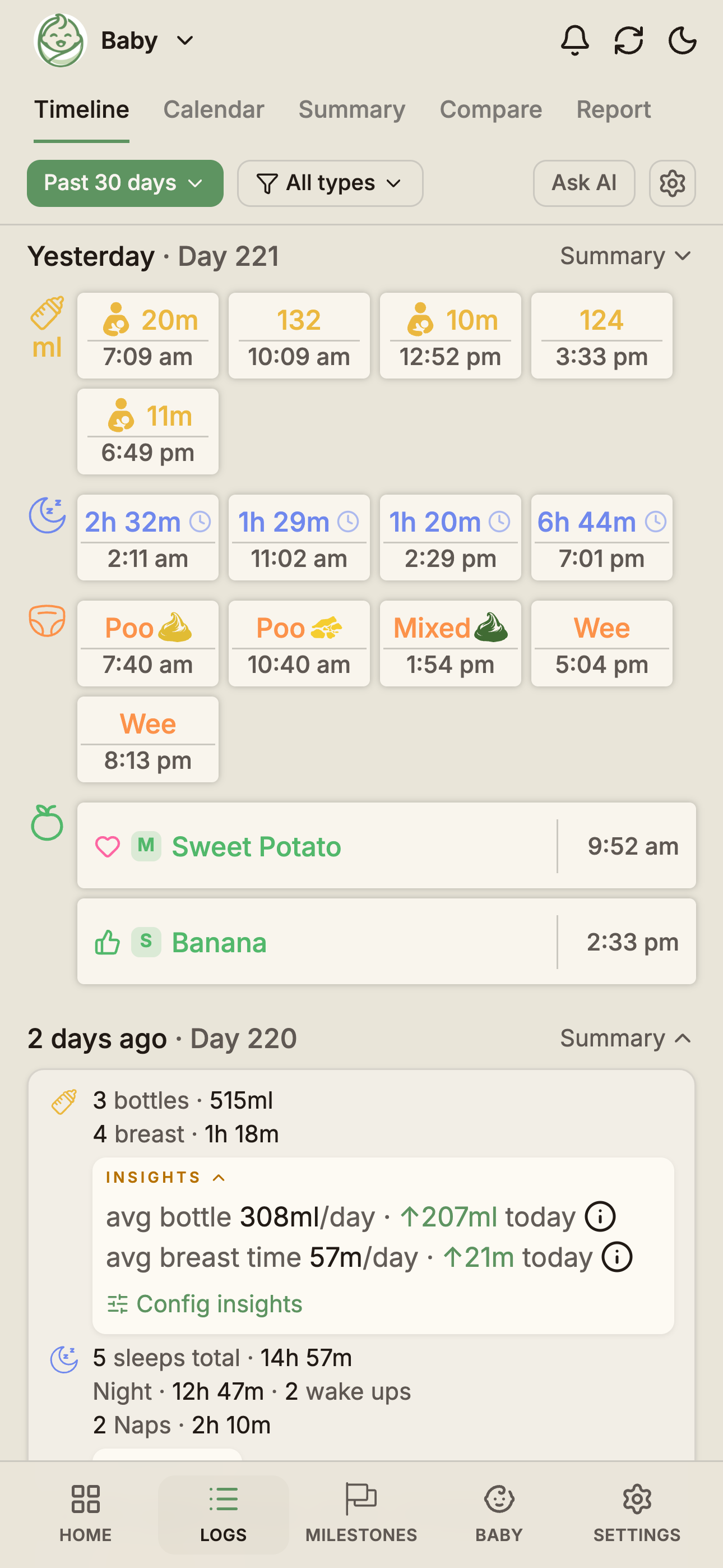
وتعرض صفحة تتبّع النوم كيف يبدو التسجيل السريع عمليًا، ويشرح دليل المشاركة كيف يرى الوالدان سجلات النوم نفسها دون رسالة تسأل «متى نامت؟»
متى تتحدث إلى ممرضة صحة الطفل
معظم «مشكلات» نوم المولود الجديد مراحل طبيعية من تطوّره. لكن تحدّث إلى ممرضة صحة الطفل أو الطبيب العام إذا:
- كان طفلك ينام باستمرار أقل بكثير من النطاقات العامة المذكورة أعلاه لعمره
- كان من الصعب للغاية إيقاظه للرضعات (خصوصًا في الأسابيع الأولى)
- بدا خاملًا جدًا أو مرتخيًا عندما يكون مستيقظًا
- كان تنفّسه مسموعًا أو مجهَدًا، أو يتوقف من حين لآخر أثناء النوم
- كان عمر طفلك أقل من 3 أشهر ولديه حمى (38°C أو أعلى): اذهب إلى أقرب قسم طوارئ فورًا
- كنت تعاني أنت نفسك من قلة النوم، فصحتك مهمة أيضًا
تستطيع خدمة صحة الطفل والأسرة(يُفتح في نافذة جديدة) في منطقتك المساعدة. ففي كل ولاية خدمات مجانية لأهل المواليد الجدد.
وإذا كان طفلك مريضًا، فإن سجل يوم المرض الذي يضم درجات الحرارة والرضعات والحفاضات المبللة ومواعيد الأدوية يسهّل عليك الإجابة عن أسئلة الطبيب العام.
سيتحسّن الأمر
هذا هو الجزء الذي يحتاج كل الأهل المرهقين من قلة النوم إلى سماعه: الأمر يتحسّن فعلًا. يبدأ معظم الأطفال النوم لفترات أطول في عمر 3–4 أشهر تقريبًا. وبحلول عمر 6 أشهر، يستطيع كثير منهم (لا كلهم) النوم 6 ساعات متواصلة ليلًا.
وحتى ذلك الحين، تقاسم النوبات مع شريكك إن استطعت، واقبل المساعدة من كل من يعرضها، واعلم أن كل ليلة مرهقة تقرّبك ليلة من أول ليلة نوم كاملة.
إذا أردت أن تبدأ في ملاحظة أنماط نوم طفلك، فإن BabyLog يسجّل القيلولات والنوم الليلي بنقرة واحدة، ويتزامن مع جهاز كل مقدم رعاية. اطّلع على صفحة ميزة النوم، أو الفرق بين الخطة المجانية وPro في صفحة الأسعار، أو ابدأ التتبّع مباشرة.
أسئلة شائعة
هل أنت مستعد لبدء التتبّع؟
يعمل BabyLog على أي جهاز — iPhone أو Android أو جهاز لوحي أو كمبيوتر. ولا يستغرق الإعداد سوى دقيقتين.
اقرأ المزيد

الرضاعة المتجمّعة وفترة التململ المسائي: ما الطبيعي؟
لماذا يريد مولودك أن يرضع بلا توقف في المساء، وهل تعني الرضاعة المتجمّعة قلة إدرار الحليب (عادةً لا)، وكيف تتجاوز فترة التململ المسائي. استنادًا إلى الإرشادات الصحية الأسترالية.

كم ينبغي أن يشرب الطفل من الحليب؟ الكميات حسب العمر (أستراليا)
نحو 150 mL لكل kg يوميًا حتى عمر 6 أشهر، ونحو 100 mL لكل kg حتى 12 شهرًا. عدد الرضعات والكميات حسب العمر وفق الإرشادات الأسترالية، وعلامات أن طفلك يحصل على ما يكفي.