
Breast Milk Storage Guidelines in Australia: How Long It Lasts at Room Temperature, in the Fridge and in the Freezer
Breast milk storage guidelines for Australia: 6 to 8 hours at room temperature, 72 hours in the fridge, 2 weeks to 12 months frozen, plus thawed milk.
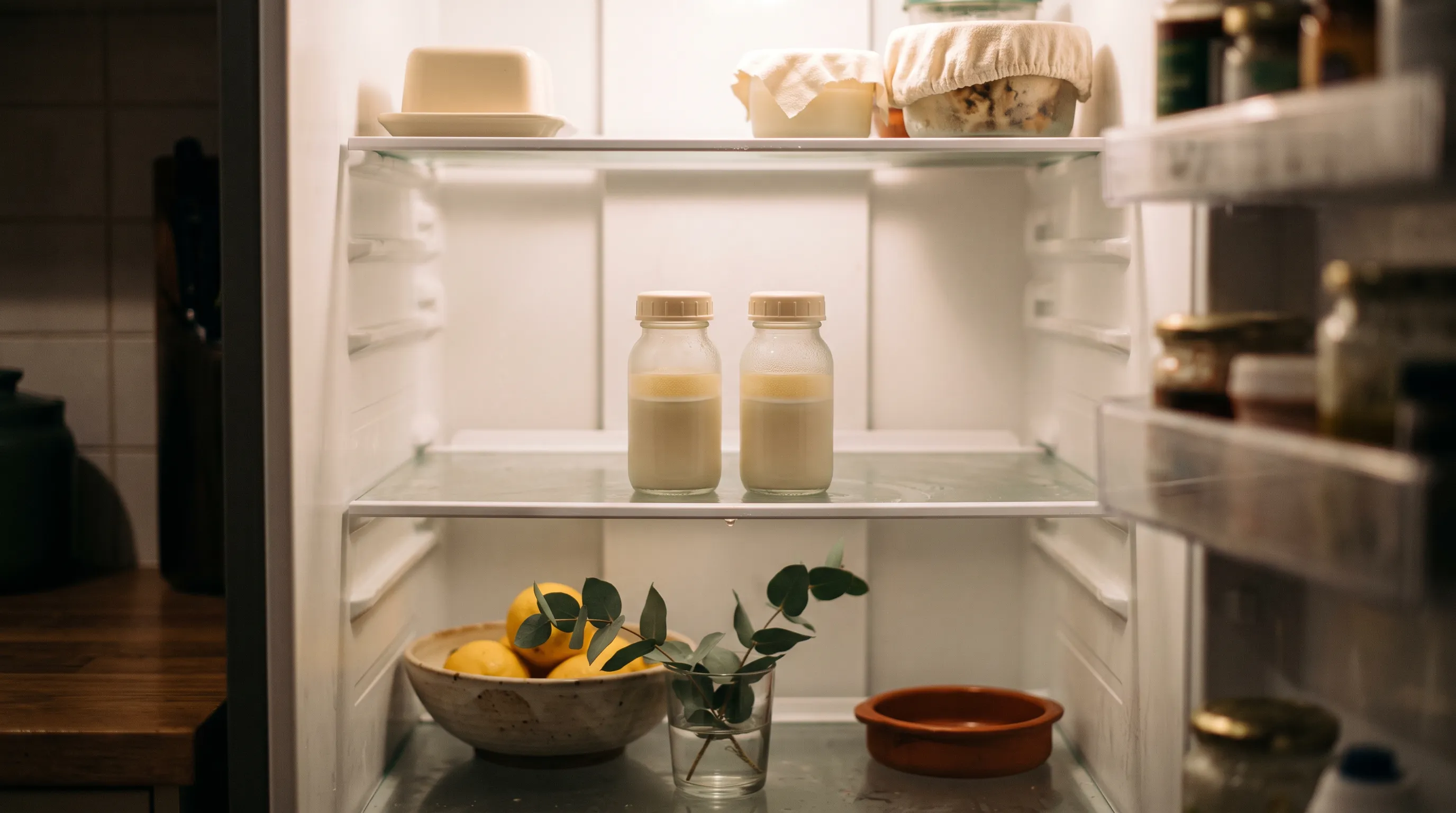
Australian breast milk storage guidelines say freshly expressed breast milk keeps 6 to 8 hours at room temperature (26°C or lower) and 72 hours at the back of the fridge (5°C or lower). Frozen, it keeps 2 weeks in a freezer compartment inside the fridge, 3 months in a separate-door freezer and 6 to 12 months in a deep freeze.
Milk thawed in the fridge keeps 24 hours there. Milk thawed in warm water is for the next feed, within 4 hours. Neither is refrozen. Milk your baby has started drinking is finished at that feed or thrown out.
These figures come from the National Health and Medical Research Council (NHMRC) Infant Feeding Guidelines, which the Australian Breastfeeding Association (ABA) adapts for parents. Pregnancy, Birth and Baby and the Sydney Children's Hospitals Network (SCHN) give the same core figures.
This guide puts every figure in one table, shows the few places Australian sources disagree, and says which one to follow.
How long does breast milk last?
Freshly expressed breast milk lasts 6 to 8 hours at room temperature, 72 hours in the fridge and between 2 weeks and 12 months in the freezer, depending on the freezer. Once milk has been thawed, warmed or offered to your baby, the time drops sharply. The table covers each stage.
| Milk | Room | Fridge | Freezer |
|---|---|---|---|
| Fresh | 6 to 8 hours | 72 hours | 2 weeks to 12 months |
| Fridge-thawed | 4 hours | 24 hours | Do not refreeze |
| Warmed | That feed only | 4 hours | Do not refreeze |
| Feed started | That feed only | Throw it out | Throw it out |
Room means 26°C or less, and fridge means 5°C or less, at the back of the fridge. Even within the room time, use the fridge if you can. The freezer time depends on the freezer type, shown in the freezer table below.
Warmed includes milk thawed in warm water. Each 4 hour time means up to 4 hours, until the next feed. Warmed milk goes back in the fridge only if your baby hasn't started it. Once your baby has started a feed, the milk is only for finishing that feed, then throw it out.
The figures come from the NHMRC's table of storage times, which the ABA's storage guide(opens in a new window) adapts for parents. Pregnancy, Birth and Baby(opens in a new window) and the Sydney Children's Hospitals Network(opens in a new window) give the same room, fridge and freezer times. The SCHN factsheet leaves out the freezer-compartment row.
The times assume clean hands, a clean container and a fridge that holds 5°C or colder. So a bottle you expressed yesterday morning and put straight in the fridge is fine to use at 2am tonight. It is well inside 72 hours.
How long can breast milk sit out, and how long in the fridge?
Freshly expressed breast milk can sit out for 6 to 8 hours at 26°C or lower, and keeps 72 hours in the fridge at 5°C or lower. Every Australian source adds the same instruction: if a fridge is available, put the milk in it. The room-temperature figure is the limit when you can't refrigerate.
The 26°C in that figure matters in an Australian summer. On a day hotter than that, the 6 to 8 hour figure no longer applies, so get the milk into a fridge or a cooler bag with an ice brick straight away.
In the fridge, store milk at the back, away from the door, where it stays coldest. The ABA(opens in a new window) gives the same advice for the freezer.
How long can expressed breast milk stay in the freezer?
Expressed breast milk keeps 2 weeks in a freezer compartment inside the fridge, 3 months in a freezer with its own door and 6 to 12 months in a deep freeze. The colder the freezer, the longer the milk keeps.
| Freezer | Temperature | How long |
|---|---|---|
| Compartment in fridge | -15°C | 2 weeks |
| Separate-door freezer | -18°C | 3 months |
| Deep freeze | -20°C | 6 to 12 months |
The NHMRC defines a deep freeze as a chest or upright manual-defrost freezer that is opened infrequently and holds its temperature. If your freezer is the top or bottom section of a fridge-freezer with its own door, the 3 month row is the one that applies.
Freeze any milk you won't use within 2 days, advise the NHMRC and Pregnancy, Birth and Baby. That keeps the 72 hour fridge limit from sneaking up on a bottle at the back.
Fresh breast milk keeps 6 to 8 hours at 26°C or lower, 72 hours in the fridge and 3 months in a separate-door freezer.
Where Australian guidance differs, and which to follow
Australian sources agree on almost every storage time. Where Australian sources differ, follow the shorter or stricter one. The list shows three real splits between Australian sources, one difference in fridge temperature and the US room-temperature figure you may see in search results. The US figure is a different guideline, and the Australian time stands.
- Fridge temperature: NHMRC, ABA, Pregnancy, Birth and Baby and SCHN give 72 hours at 5°C or lower. Children's Health Queensland gives up to 3 days at 4°C or lower. The time is the same, and Queensland's figure assumes a colder fridge. Follow the 72 hours, at the back of the fridge, where it is coldest.
- Room temperature: All Australian sources give 6 to 8 hours at 26°C or lower. The US CDC (supporting evidence) gives up to 4 hours at about 25°C or colder. Follow the Australian 6 to 8 hours, but fridge the milk as soon as you can, as every Australian source says.
- Warmed, not started: ABA and Pregnancy, Birth and Baby say it can go back in the fridge for up to 4 hours. Children's Health Queensland says to throw out warmed milk that isn't used. Warm only what your baby is likely to drink.
- Thawed on a trip: ABA says to use it within 24 hours. NHMRC and Children's Health Queensland say to put it in the fridge and use it within 4 hours. Use it within 4 hours, and don't refreeze.
- Topping up a container: NHMRC and Pregnancy, Birth and Baby say to use a new container each time. ABA says to chill fresh milk in the fridge first, then add it. Use a new container each time.
The Queensland figures come from Children's Health Queensland's guide to the first 12 months(opens in a new window), the booklet Queensland's clinical guideline on establishing breastfeeding points to.
Many search results quote the US Centers for Disease Control and Prevention(opens in a new window) (CDC) instead. The CDC gives 4 hours at room temperature and 4 days in the fridge, and about 6 months as best in the freezer. It allows 2 hours for milk once it is at room temperature or warmed.
Those are US figures. In Australia, the NHMRC table is the national reference, and the ABA, Pregnancy, Birth and Baby and SCHN all build on it.
How to thaw and warm breast milk
Thaw frozen breast milk in the fridge, or stand the container in warm water. Never thaw it on the bench or in the microwave. The ABA's guide to preparing expressed milk(opens in a new window) gives both methods:
- In the fridge. This takes several hours or overnight. Milk thawed this way keeps 24 hours in the fridge, or up to 4 hours at room temperature.
- In warm water. Stand the container in a bowl of warm, not hot, water and move it around until the milk is liquid. Top up with a little hot water as the bowl cools. Milk thawed this way is for the next feed.
To warm milk for a feed, stand the bottle or bag in hot, not boiling, water until it feels warm, then swirl it to mix. Children's Health Queensland says to keep it in the water for no more than 10 minutes. Drop a little on your wrist first. It should feel warm, not hot.
Three rules apply every time:
- No microwave. The ABA, SCHN and Children's Health Queensland all say never to microwave breast milk. SCHN explains it heats unevenly, can cause burns and destroys nutrients.
- Warm it once. Don't reheat milk that has already been warmed.
- Leftovers go. Throw out any milk left in the bottle after a feed.
Warming isn't essential. The ABA notes that some babies are happy with cooler milk, especially as they get older.
To cut down on waste, offer small amounts and warm another small amount if your baby is still hungry. For how much each session tends to give, see our guide to how much breast milk to pump.
Can you refreeze breast milk?
No. Breast milk that has been thawed or warmed should never go back in the freezer. Every Australian source agrees on this one, and the ABA explains why:
Australian Breastfeeding Association · Storing expressed breastmilkDon't refreeze breastmilk after it's been thawed or warmed. Don't reheat breastmilk more than once. Both of these can increase the risk of bacterial growth.
A power cut is the one case where frozen milk might be saved. The ABA(opens in a new window) says to keep the freezer closed. Frozen milk may stay frozen for up to 48 hours, depending on how full and how big the freezer is. If you can, move the milk to a working freezer in an esky with ice packs.
Once the power is back, check each container:
- Partly thawed, still with ice crystals: it can be refrozen.
- Fully thawed: throw it out.
Cooler bags, travel and childcare
Carry expressed milk in an insulated bag or esky with a freezer brick, and put it in the fridge or freezer as soon as you arrive. The NHMRC and Children's Health Queensland set out the same transport rules:
- Use an insulated container, such as an esky with a freezer brick. On a cool day or a short trip, the ABA says you may not need anything special.
- Check frozen milk on arrival. If it's still frozen, it goes straight into the freezer. If some has thawed, put it in the fridge and use it within 4 hours. Don't refreeze it.
- Fresh milk that was never frozen can go into the fridge or the freezer on arrival.
The ABA's own page allows 24 hours for milk that thaws on the way. The 4 hour figure from the NHMRC and Children's Health Queensland is the stricter one, so it is the safer one to follow.
For childcare or a nanny, the same rules apply at the other end:
- Label every container with the date and time you expressed.
- Send small portions so less is thrown away. Any milk left after a feed can't be kept.
- Ask the centre how they store expressed milk and what they need on the label.
The ABA's preparing expressed milk(opens in a new window) page links a leaflet for your baby's carer, the Carer's guide to the breastfed baby.
Our guide to a baby routine for childcare covers what else to hand the educators. Going back to work? Our pumping schedule for working mums has sample workdays and how much milk to leave.
Labelling and oldest-first rotation
Write the date and time you expressed on every container, and always use the oldest milk first. Pregnancy, Birth and Baby, the SCHN and Children's Health Queensland all say to label with the date and time. The NHMRC, Pregnancy, Birth and Baby and Children's Health Queensland all say oldest first.
Four more storage habits from the guidelines:
- Fill no more than three-quarters full. Milk expands as it freezes, and a full container can burst, says the ABA.
- Use fresh milk when you can. The NHMRC and Pregnancy, Birth and Baby both say to use fresh milk whenever possible.
- Store at the back. Keep containers at the back of the fridge or freezer, away from the door, where it stays coldest.
- Use food-grade containers. The ABA lists baby bottles, plastic or glass containers with tight lids, zip-lock bags, and syringes for colostrum. All must be food-grade and BPA-free, and safe to freeze if you plan to.
Premature or unwell babies need stricter rules. The NHMRC storage times are for healthy babies born at term, and hospital storage follows its own rules. If your baby is premature or unwell, ask your doctor, midwife or the hospital staff what to do. The ABA says fresh milk each day is best for sick babies.
- Call 000: If your baby is unconscious, very lethargic or hard to wake.
- See a doctor: A baby under 6 months who is vomiting or has a fever needs to see a doctor, say the Royal Children's Hospital(opens in a new window) and Pregnancy, Birth and Baby(opens in a new window).
- See your GP or call the Pregnancy, Birth and Baby nurse line: If your baby becomes unwell, with vomiting, diarrhoea, a fever or fewer wet nappies.
- Helplines: For help with expressing or storing, call the ABA's 24-hour Breastfeeding Helpline on 1800 686 268. Pregnancy, Birth and Baby's maternal child health nurses are on 1800 882 436, 7am to midnight (AET), 7 days a week.
Keeping a record of each session
BabyLog's free pumping log saves the time and mL of every session, with an optional note. The Data Table lists every past session on the free plan. Writing the date and time on the bag is still what tells you how old it is.
If a phone suits you better than a notebook by the pump, you can start free.
Common questions
Ready to start tracking?
BabyLog works on any device — iPhone, Android, tablet, or desktop. Setup takes two minutes.
Keep reading
How Much Breast Milk Should You Pump for a Newborn? Amounts by Day, How Often and How Long
How much breast milk should you pump? Drops at first, 50 to 70 mL a session by day 5, 500 to 800 mL a day by 2 weeks, plus how often and how long.
A Nanny Log That Actually Works: One Shared Log for Every Carer
A nanny tracker and shared nanny log for families with multiple carers: mum, dad, nanny and grandparents log and see the same day in real time.