
Changing Your Baby's Formula: Signs It May Not Suit, How to Switch, and the Record to Bring to Your GP
Changing baby formula rarely settles a fussy baby. The signs a formula may not suit, how to switch between standard tins, and when to see a GP.
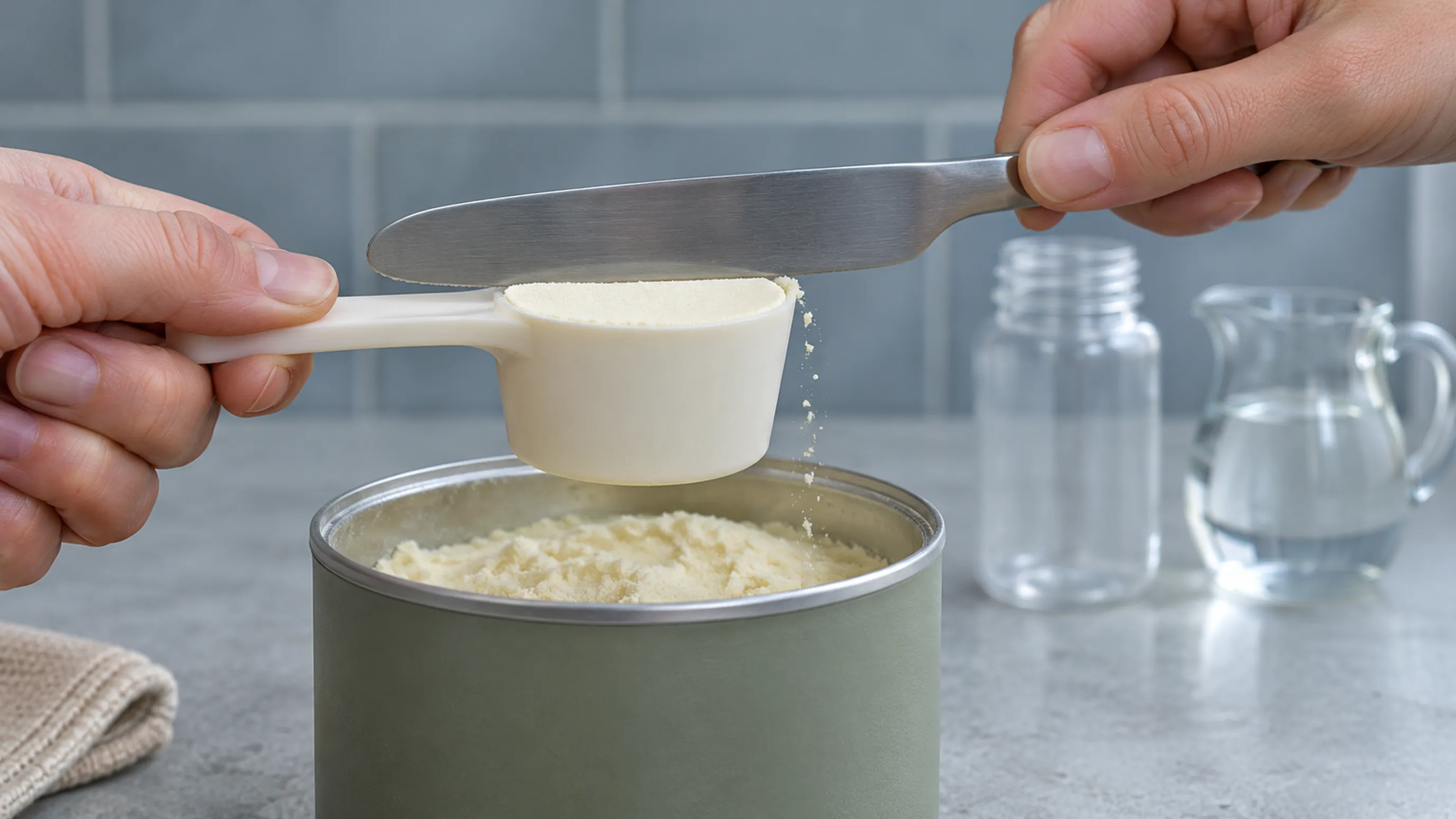
Changing baby formula between two standard tins is a small change. Every infant formula sold in Australia meets the same food standard. A switch rarely settles an unsettled baby, though. Check with your nurse or GP first, make each bottle as the new tin says, and give your baby a few days to adjust. Suspected allergy needs your GP.
When your baby fusses through every bottle, the tin is the easiest thing to blame, and the shelf of other brands is right there. This guide covers the signs that point at the formula, the common things that usually have nothing to do with it, how to switch, and what to write down so the GP visit gets somewhere.
Signs a formula may not be agreeing with your baby, and what's common anyway
Diarrhoea or blood in the poo, a skin rash, slow weight gain, and discomfort or fussiness after feeds can all mean a formula doesn't suit your baby. Pregnancy, Birth and Baby(opens in a new window) lists those four as possible signs of a cow's milk allergy, and says to speak to your doctor if you notice them.
Plenty of other things look worrying and turn up on any formula:
- Spilling milk after feeds. Spitting up is common(opens in a new window) in formula-fed and breastfed babies alike. Our guide to posseting, reflux and vomiting sorts the everyday spill from the kind that needs a GP.
- Unsettled spells and crying. A new formula doesn't help most unsettled or colicky babies.
- Reflux. The Royal Children's Hospital(opens in a new window) (RCH) says changing formulas will have no effect on reflux and is not recommended.
- Poo that looks different. Our baby poo colour chart shows which colours are common and which need a check.
The Better Health Channel(opens in a new window), run by the Victorian Department of Health, puts it plainly:
Better Health Channel · Bottle feeding, nutrition and safetyIf your child is unsettled, 'colicky' or has difficulty feeding, you may think you need to change the formula you are using. This isn't helpful for the majority of babies.
Before you blame the formula, check how each bottle is made. A 2021 article in the Medical Journal of Australia(opens in a new window) found the major standard brands use one scoop per 30, 50 or 60 mL of water, depending on the tin. A bottle made with one brand's habit and another brand's scoop comes out too weak or too strong.
The authors note that formula made too weak risks slow growth, and formula made too strong risks dehydration or too much weight gain. Our formula feeding guide covers safe preparation step by step.
Cow's milk allergy symptoms in babies, and who diagnoses it
Cow's milk allergy is an immune reaction to the protein in milk, and a doctor diagnoses it, often with an allergy specialist. healthdirect(opens in a new window) says it affects about 1 in 50 preschool children, and most grow out of it by school age.
ASCIA(opens in a new window), the Australian body for allergy specialists, describes two kinds of reaction:
- Fast reactions start within about 15 minutes, and up to 2 hours, after milk. Signs include hives, swelling of the lips or face, tummy pain, vomiting and diarrhoea.
- Delayed reactions start 2 or more hours after milk. Signs include worsening eczema, or vomiting and diarrhoea that come on later. Allergy tests are usually negative with this kind.
healthdirect says a doctor can confirm the allergy with skin prick tests, and that ASCIA recommends diagnosis with a specialist. Diagnosis often involves taking dairy out for 1 to 4 weeks, then bringing it back in a planned way. That step happens only with a medical specialist's advice.
So don't cut out milk at home to test it. Skip IgG food tests and hair analysis too, because ASCIA says they have no place in diagnosing cow's milk allergy.
Lactose intolerance is a different problem. It means trouble digesting lactose, the sugar in milk, and healthdirect says it does not cause rashes or anaphylaxis. So a rash after feeds is a reason to see your GP.
How to switch formula between standard brands
To switch between two standard formulas, check with your nurse or GP, make every bottle by the new tin's directions, then give your baby a few days on it. The Australian sources set out these steps:
- Ask first. Talk to your maternal and child health nurse or GP before you switch, as the Better Health Channel recommends.
- Read the new tin. Make every bottle exactly as the manufacturer's directions say, which is healthdirect(opens in a new window)'s advice for any formula. Scoops and water per scoop vary between brands, so use the scoop from the new tin.
- Give it a few days. Allow your baby a few days to get used to the new formula, as Pregnancy, Birth and Baby advises.
- Then stick with it. Avoid switching brands many times.
Formula company websites publish day-by-day schedules that mix the old and new formula. Pregnancy, Birth and Baby, healthdirect and the Better Health Channel give no mixing schedule, so ask your nurse whether to change over in one go or across a few days.
Moving to a specialised formula is a bigger step. The Better Health Channel says to seek medical advice before using specialised formula.
Formula types, and what Australian guidance says about each
A standard cow's milk-based formula suits most formula-fed babies, and Pregnancy, Birth and Baby says to offer one first to a healthy, full-term baby. The Better Health Channel says every formula sold in Australia conforms to the Australia New Zealand Food Standards Code (Standard 2.9.1, Infant Formula Products). The other types have narrower jobs:
| Type | What it is | What the guidance says |
|---|---|---|
| Standard | Cow's milk based | Offer first |
| Goat's milk | Goat's milk based | Not for cow's milk allergy |
| Soy | Soy protein | Only on a doctor's advice; for allergy, usually from 6 months |
| Partly hydrolysed (HA) | Milk protein partly broken down | Not for cow's milk allergy, and not recommended without allergy |
| Low lactose | Less milk sugar | For lactose intolerance; not for cow's milk allergy |
| Thickened (anti-reflux) | Thickener added | Only on medical advice |
| Extensively hydrolysed or amino acid | Specialised | Guided by a specialist, often on prescription |
The table draws on Pregnancy, Birth and Baby, the Better Health Channel, healthdirect and ASCIA. ASCIA rules out goat's milk, HA and lactose-free products for a baby with cow's milk allergy, and healthdirect says most children with the allergy also react to goat's and sheep's milk.
A formula's price is not a sign of its quality, according to Pregnancy, Birth and Baby. If your doctor recommends a specialised formula, ask about a prescription, which can bring the cost down.
What to record before and after a change
A few days of notes before the change and the week after give your GP something to compare. "Worse since the new tin" is hard to judge. Feeds and nappies written down on both sides of the switch date are much easier.
Note these:
- Feeds. The time, the mL offered and the mL left in the bottle.
- How feeds go. Fussing, pulling off, arching, or crying after the bottle.
- Spills and vomits. How often, roughly how much, and the colour.
- Nappies. Wet nappies in 24 hours, poo colour and texture, and any blood or mucus.
- Skin. Any rash or eczema, and when it appeared.
- The switch. The date, the old and new formula, and any change in how you make bottles.
- Weights. The weights recorded in your baby's health record book.
A phone photo of a rash or an odd nappy shows the GP what is hard to describe in a busy appointment.
When to see your GP, and when to call 000
Breathing trouble, throat swelling or a pale, floppy baby means 000. Green, red or black vomit, or a dry nappy for 4 to 6 hours, means a doctor right away.
- Call 000: noisy breathing or wheeze, throat swelling, a hoarse voice, or your baby going pale and floppy. healthdirect and ASCIA list these as signs of anaphylaxis, which is always a medical emergency.
- See a doctor right away or go to emergency: green, red or black vomit, or no wet nappy for 4 to 6 hours, says Pregnancy, Birth and Baby on its vomiting(opens in a new window) and dehydration(opens in a new window) pages.
- Go straight to emergency: a baby younger than 3 months with a fever above 38°C.
- See your GP: blood or mucus in the poo, yellow vomit, projectile vomiting, a fever in an older baby, gagging or choking, a swollen or bloated tummy, slow weight gain or weight loss, or refusing feeds, from Pregnancy, Birth and Baby's spitting up(opens in a new window) and vomiting pages and the RCH.
- See your GP: a rash, diarrhoea, or discomfort and fussiness after feeds that keeps happening.
- Ask your child health nurse: how much formula to offer, if you're unsure.
For advice at any hour, call healthdirect on 1800 022 222.
Pregnancy, Birth and Baby's maternal child health nurses answer 1800 882 436, 7am to midnight (AET), 7 days a week.
Keeping the record before and after
The record works best when it starts a few days before any switch, so your GP sees your baby's usual next to the change. If a GP has suggested thickened feeds for spilling, our guide to reflux medication for babies covers the record for that review too. For mL amounts in the first month, see newborn feeding amounts.
A sheet of paper on the fridge does the job if everyone who gives a bottle writes on it.
BabyLog keeps the same record on your phone for free: bottle feeds in mL, nappy colour and consistency, symptoms such as vomiting, diarrhoea, a rash or irritability, and a note for the day you changed tins.
On a new free account, the Compare view puts the last 7 days of daily averages, including bottle mL and poos a day, beside the 7 days before, once each week has a few full days logged. The Data Table keeps every entry on every plan, so you can find the switch date while you're with the GP.
If that would help, you can start free in your phone's browser.
Common questions
Ready to start tracking?
BabyLog works on any device — iPhone, Android, tablet, or desktop. Setup takes two minutes.
Keep reading
Formula Feeding Guide (Australia): How Much, How Often, and What the Tin Leaves Out
Formula feeding guide Australia: around 150 mL per kg a day to 6 months, feeds and mL by age, safe preparation, and why the tin's table is a guide.

Posseting, Reflux or Vomiting? What's Normal After a Newborn's Feed, and What to Note Before the GP
Posseting is normal milk spilling after a feed. How it differs from reflux disease and vomiting, and when to see a GP or go to emergency.