
How Many Wet Nappies a Day? A By-Age Guide for Parenting in Australia
At least five heavy wet nappies a day once feeding is established. The by-age counts, what a heavy nappy feels like, and the dehydration red flags.
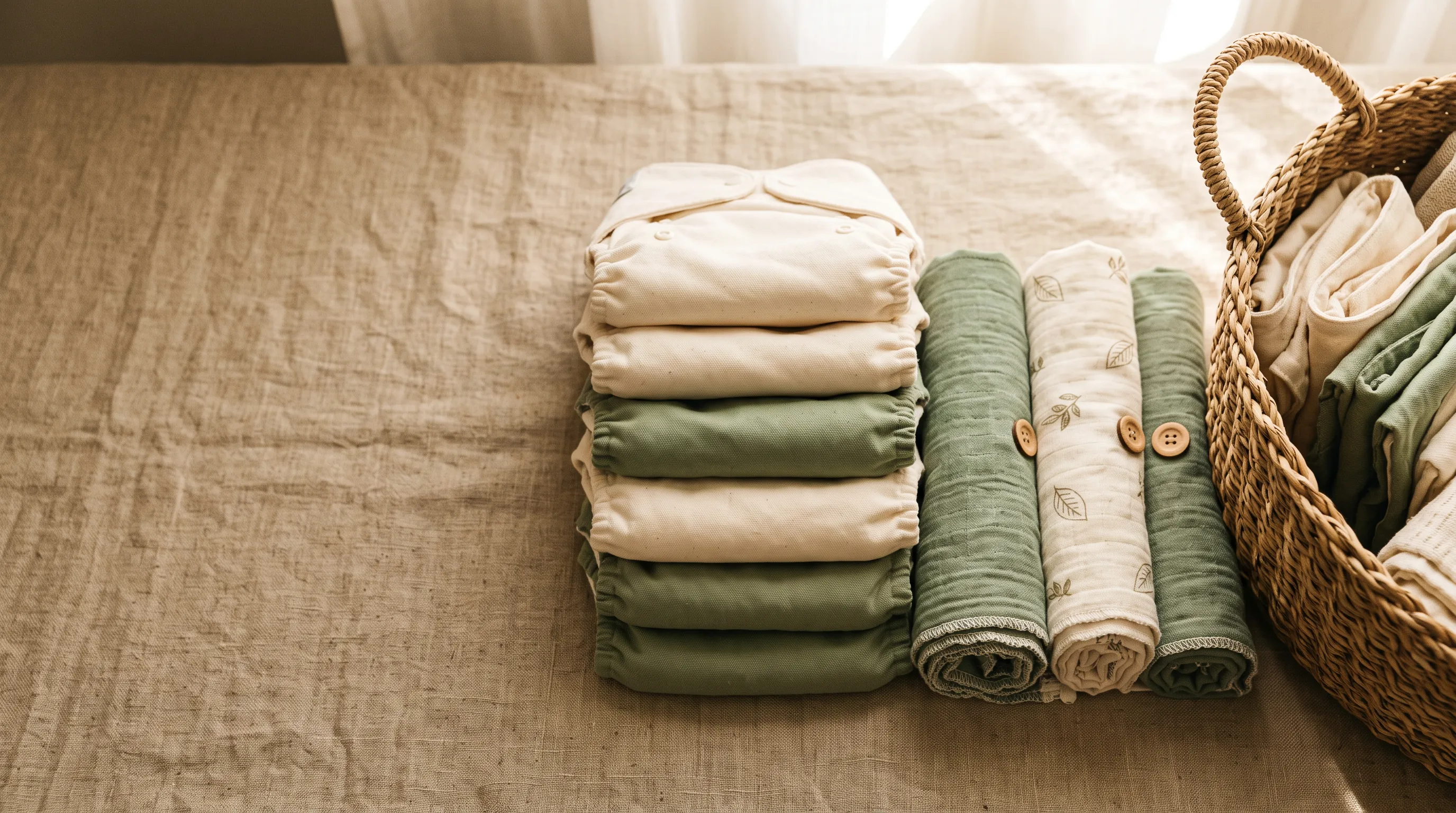
How many wet nappies should a newborn have? At least one on day one, two on day two, three on day three and four on day four. From day five, a breastfed baby should have at least five heavy wet disposables, or six very wet cloth nappies, every 24 hours, with pale wee.
You can't see how many millilitres your baby takes at the breast, and a bottle doesn't show how much went down the bib. Wet nappies let you count what comes out instead. They are the most practical check at home of whether your baby is taking in enough fluid.
This guide gives the count for each day of the first week and for each stage up to the first birthday. It also covers what a heavy nappy feels like and the red flags that mean it's time to see a doctor.
How many wet nappies should a newborn have?
From day five onwards, a newborn should have at least five heavy wet nappies in every 24 hours. Before that, the count climbs with your milk supply, at roughly one wet nappy per day of life:
- Days 1 to 4: at least one wet nappy on day one, two on day two, three on day three and four on day four.
- Day 5 onwards: at least five heavy disposables, or six very wet cloth nappies, with pale, mild-smelling wee.
- As your baby grows: wees come less often. The change from your baby's usual pattern matters more than the number itself.
The Australian Breastfeeding Association(opens in a new window) (ABA) gives these counts for a baby having only breastmilk. If your baby has formula, see the signs a formula-fed baby is getting enough, which include the wet nappy count used for bottle feeding.
In the first few days, salts in your baby's wee can leave a rusty, orange-red stain on the nappy. The ABA says this is normal early on, and to check with your doctor if you see it after day 4.
How many nappies a day for a newborn, wet and dirty?
From day five, a breastfed newborn has at least five wet nappies a day, and under 6 to 8 weeks usually three or more runny poos as well. Some changes are wet and dirty at once, so the total varies from baby to baby. The wet count alone means at least five changes a day.
The Australian Breastfeeding Association describes each poo as about the size of your baby's palm. Our baby poo colour chart covers what's in the dirty ones.
How many wet nappies a day, by age
The count climbs through the first week, then holds at one figure from day five. The ABA sets no separate count for each month, so where one figure covers a range of ages, the row says so.
| Age | Wet nappies in 24 hours | Notes |
|---|---|---|
| Day 1 | At least 1 | Colostrum feeds are small, so one wet nappy is normal |
| Day 2 | At least 2 | The count rises as your milk increases |
| Day 3 | At least 3 | Wees should be getting heavier |
| Day 4 | At least 4 | Milk is usually "coming in" around now |
| Day 5 to 4 weeks | At least 5 heavy disposables (or 6 very wet cloth) | Wee should be pale and mild-smelling |
| 1 to 6 months | At least 5 heavy disposables (or 6 very wet cloth) | The same figure as day five; the ABA gives no count by month |
| 7 to 12 months | No separate count | Babies wee less often as they grow; a drop from your baby's usual is the thing to notice |
Two things to keep in mind when reading the table:
- The trend matters most. One slightly drier nappy isn't a crisis. A day where the count clearly drops below your baby's normal, or the wee turns dark, is worth acting on.
- These are minimums. Plenty of well-fed babies wet more nappies, and more pale wee is no problem.
How many wet nappies should a 2, 3 or 4 month old have?
A breastfed baby aged 2, 3 or 4 months should have at least five heavy wet disposable nappies, or six very wet cloth ones, every 24 hours, with pale wee. The Australian Breastfeeding Association sets that figure from day five onwards and gives no separate count by month, so the same floor applies at 5 and 6 months too.
Over these months, the pattern tells you more than any single day. Raising Children Network(opens in a new window) notes that babies wee less often as they get older. Heavy nappies, pale wee and your baby's usual count are the things to watch. Dark wee, or a clear drop from their usual, is the change worth acting on.
How many wet nappies should a 7 to 12 month old have?
The Australian Breastfeeding Association and Raising Children Network give no separate wet nappy count for 7 to 12 month olds. Babies wee less often as they grow, but may still wee at least 6 to 8 times a day, says Raising Children Network. At 7, 8 or 9 months, watch for heavy nappies, pale wee and no sudden drop from your baby's usual.
The same holds at one year: your child's own pattern is the guide. A clear fall from their usual is still worth a GP visit. The dehydration red flags below apply at every age, including no wet nappy for 4 to 6 hours.
If your baby has started solids, our guide to starting solids covers what to expect from food at this age.
What counts as a "heavy" wet nappy
Modern disposables are so absorbent that a wet one can feel almost dry, which trips up a lot of parents doing the count. The ABA's benchmark: a properly wet nappy holds about 60g of wee, roughly the weight of a large egg in your hand.
If you're unsure, compare a fresh nappy with the used one. The difference is obvious once you've felt it.
Colour is the second check. Raising Children Network describes plenty of clear, colourless wee as normal, and a heavy nappy as a sign there's plenty of it. Infrequent or darker wee can be a sign your baby isn't getting enough fluids.
A newborn's wet nappy count climbs with your milk, one on day one and two on day two, then settles at five or more heavy nappies a day.
Why the wet nappy count matters
What goes in comes out. A baby who is feeding well produces plenty of pale wee. A baby who isn't taking in enough produces less, and it turns darker and stronger smelling. That makes the nappy bin a reliable record of how feeding is going.
The Australian Breastfeeding Association(opens in a new window) puts it plainly:
Australian Breastfeeding Association · Feeds and nappies in the first weekWe can't measure how much a baby takes when they breastfeed but even in the first week, there are some reliable signs that your baby is getting enough. Baby's wee will be pale. If your baby's wee is dark and smelly, this is a sign that they aren't taking in enough milk.
Wet nappies aren't the only sign. Steady weight gain and calm, content periods between feeds matter too. Wet nappies are the one sign you can check today, without scales or a clinic appointment. Our guide to how much milk a baby drinks covers the other signs.
Dehydration red flags
Babies are more likely to become dehydrated than older children and adults, so a falling nappy count is worth acting on promptly.
Raising Children Network(opens in a new window) lists fewer or lighter wet nappies as the first practical sign, alongside dry mouth and low energy. Pregnancy, Birth and Baby(opens in a new window) is specific about timing: a baby who hasn't had a wet nappy for 4 to 6 hours should see a doctor right away or go to the nearest emergency department.
See a doctor promptly if your baby has fewer or drier nappies than usual, dark yellow or brown wee, a dry mouth, or hasn't had a wet nappy in 4 to 6 hours, especially if they're under 6 months.
Signs of severe dehydration need urgent care: call 000 or go to your nearest emergency department. Those signs include being unusually sleepy or floppy, sunken eyes or a sunken fontanelle (the soft spot on the head), no tears when crying, and cold hands and feet.
Trust your instincts here. You know your baby's normal better than anyone, and "fewer than usual" is exactly the kind of change a parent spots first. If something seems off and isn't urgent, talk to your GP or child and family health nurse.
Counting nappies without the mental load
The catch with counting wet nappies: on four hours of broken sleep, nobody reliably remembers whether that 2am change was last night or the night before. When two people split the changes, neither of you holds the full count. A paper tally by the change table works, as long as everyone who changes a nappy marks it.
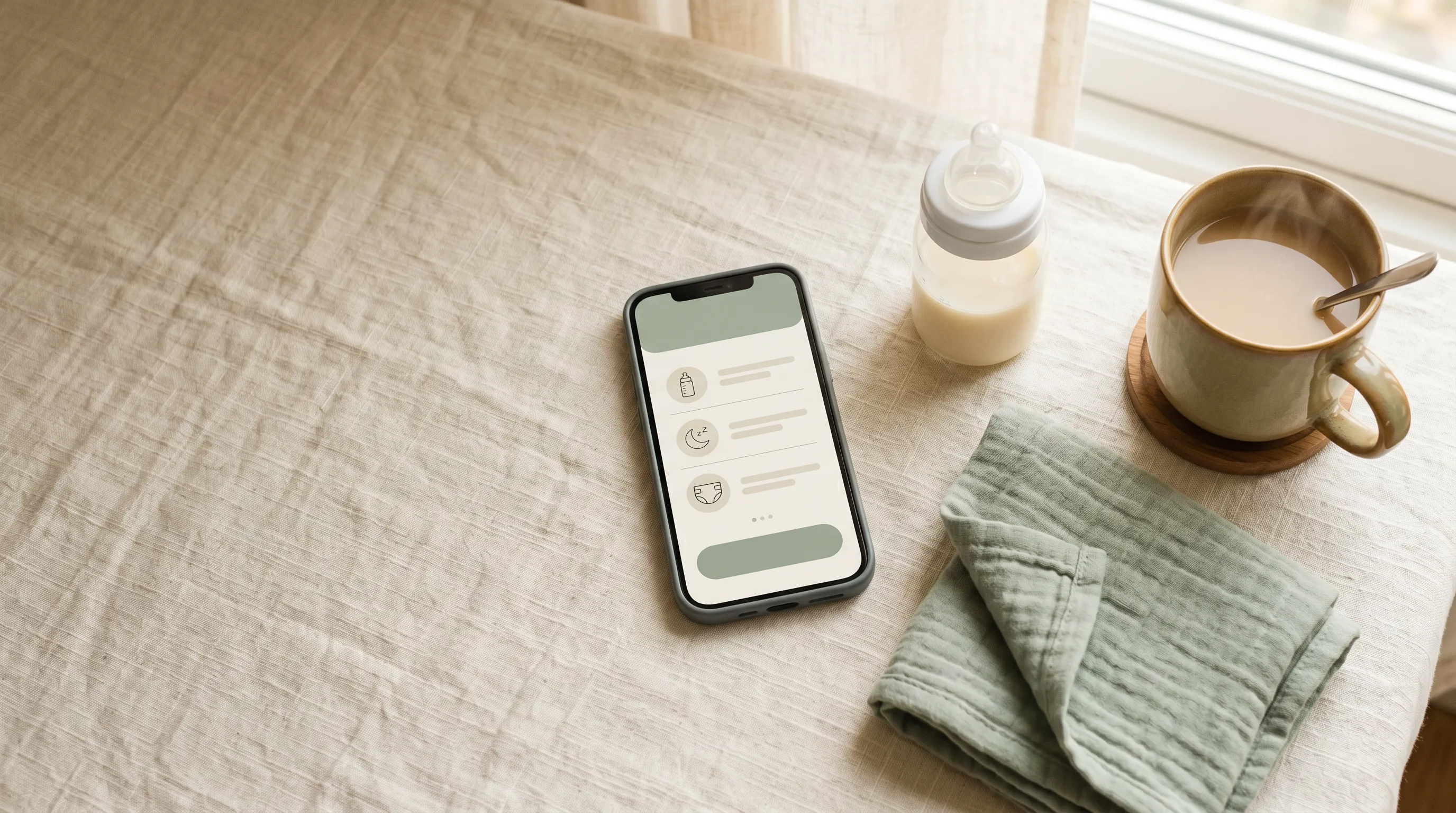
BabyLog keeps the same tally on your phone for free: nappy logging is tap-only, and a wet nappy takes two taps. The home screen shows today's nappy count, and changes your partner logs reach your phone when BabyLog next opens or reconnects. If a nurse asks how many wet nappies your baby has had, you can read them off the log.
If that would help at 3am, you can start free in the browser on your phone, with no app store needed.
Weighing up tracking apps more broadly? Our guide to what to look for in a newborn feeding and nappy tracking app compares the options.
Common questions
Ready to start tracking?
BabyLog works on any device — iPhone, Android, tablet, or desktop. Setup takes two minutes.
Keep reading
Baby Poo Colour Chart: What's Normal and When to Worry
A practical guide to newborn and infant nappy colours — what each colour means, what's normal at each stage, and the one colour you should never ignore.
App to Track Newborn Feedings and Nappies: What to Look For
A short buyer's guide for parents looking for an app to track newborn feeds and nappies — six qualities that matter day-to-day, and how to evaluate any tracker against them.