
Baby Medicine Reminder App: Log Every Dose, Remind Every Carer, and Stop When the Course Ends
What a baby medicine reminder app should do: log each dose and who gave it, remind every carer on time, and stop when the course ends.
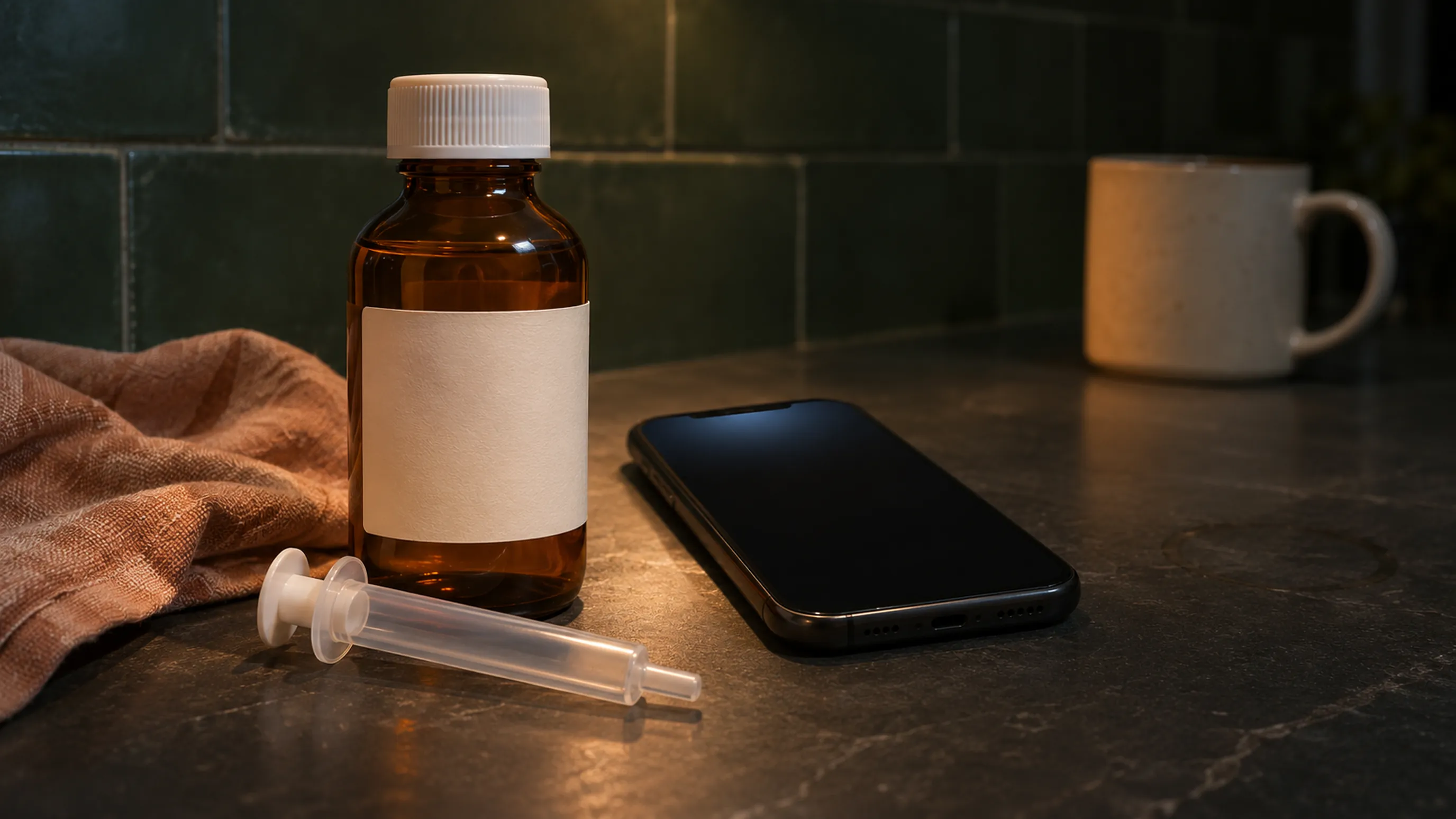
A baby medicine reminder app has four jobs. It records each dose with the medicine, the amount from the label, the time and who gave it. It reminds you at the times your doctor or pharmacist gave you. It reaches the other carer, so nobody has to guess. And it stops when the course ends.
If the script was filled today and two of you are sharing tonight's dose, settle who logs it before the first dose goes in.
What to record for every dose
Write down the medicine's name, its active ingredient, the time you gave it and the amount. That's the list healthdirect gives, and it's what you'll want in front of you if you call a GP or nurse line.
healthdirect · Medicines for babies and childrenWrite down the name of the medicine, the time you gave it, the amount and the active ingredient.
When two of you share the care, add one more field: who gave it. With two adults giving doses, each of you needs to see whether the other has already given it.
It matters more than it sounds. In Australia, giving the wrong dose of medicine is the most common cause of accidental poisoning in children under one year of age, says healthdirect(opens in a new window).
A few habits keep the record honest:
- Write it straight away. A dose noted at 3am "for later" is a dose nobody can see at 7am.
- Record the amount as the label says. Use the same unit as the pack or the pharmacist's label, so nobody converts at 3am.
- Keep one record. healthdirect suggests a medicines list(opens in a new window) to track which medicines were taken and how much. Two lists, one on the fridge and one in your head, will disagree.
The shared-care habits, such as checking the active ingredient on every pack and asking the other adult to check the dose, are set out in two carers, one medicine. If the medicine is for after a vaccination, read our guide to your baby after vaccinations first.
What a good medicine reminder does
A good medicine reminder follows the instructions you were given, reaches whoever gives the next dose, and stops when the course ends. Before you set one, you need the instructions in hand.
healthdirect says a doctor who prescribes a medicine for your child should explain how often to give it, how long your child needs to take it, and when to give it, such as before or after meals. If any of those is missing from the label, ask your pharmacist before the first dose.
Then judge any app against this list:
- Clock times or a gap. Some instructions read as times of day, like morning and night. Others count from the last dose. A good reminder handles both.
- A course length. If the course runs for a set number of days, the reminder should stop on the last day by itself. Nobody wants a day-11 nudge for a 10-day course.
- Every carer's dose counts. If your partner gives the lunchtime dose, the next reminder should count from that dose.
- It reaches the other carer. On a shared day, the reminder is most useful on the phone of whoever is giving the next dose.
- An early heads-up. A notice before the dose is due helps when it falls in the middle of a feed or a daycare pickup.
- Pause without starting over. When a medicine is on hold, you want the reminder to stop without losing its settings.
- The last dose in plain sight. Before every dose, you should be able to see when the last one was given, and by whom.
A reminder says a dose is due. The record says whether someone already gave it.
Daily medicines: vitamin D, iron and reflux medicine
A daily medicine often runs for weeks or months, so a reminder at the same time each day suits it. If the doctor gave a stop or review date, set the reminder to end then.
The risk with a daily dose is a quiet miss on a busy day, or a second dose from a carer who didn't know it was done.
If your baby has been prescribed vitamin D drops, a set time each day, such as the first morning feed, makes them easy to fit in. There's more in our guide to vitamin D drops for babies.
If your baby came home from the special care nursery or NICU with a daily supplement such as iron, ask the team for each medicine's times in writing. Our guide to bringing a premature baby home covers the first weeks at home.
If your GP or paediatrician has prescribed a reflux medicine, ask when to give it around feeds, then set the reminder to match. There's more in reflux medication for babies.
Antibiotic reminders for a short course, such as three times a day
Give every dose at the time you were told, and finish the full course, even if your baby seems better. healthdirect says it's important to finish the full course, even if your child feels better before it's finished.
Its antibiotics(opens in a new window) page also says to take antibiotics at the right time and for as long as you're told to. healthdirect names missing doses and not finishing the course as ways of not taking antibiotics properly, which adds to antibiotic resistance.
"Three times a day" leaves room for guesswork. Ask your pharmacist which times suit your baby's day, write them down, and set your reminders to those times on day one.
The same page says to speak with your doctor straight away about a rash, nausea, diarrhoea or other side effects while on antibiotics.
If a dose is missed, vomited or spat out
Don't give another dose on a guess. What to do after a missed, vomited or spat-out dose differs from one medicine to the next.
- Check the pack: read the label and the leaflet that came with the medicine.
- Ask a professional: healthdirect says that if you're unsure, speak to your doctor, pharmacist or child health nurse.
- Write it down: note the time and what happened, so the next carer knows the dose may not have gone in.
Medicine reminders in BabyLog
In BabyLog, logging every dose is free, and reminders for each medicine are part of Pro. The record comes first: an After each dose reminder counts from the last logged dose, and a set-time reminder skips itself when the dose is already logged.
What the free plan does with every dose:
- Your baby's medicine list. Type the medicine's name the first time, then pick it from the list after that.
- The amount and unit from the label. Choose ml, drops, tsp, tbsp, tablet, capsule or sachet, then add the time and any notes.
- Every caregiver sees it. Each dose syncs to everyone on the baby, and the Logs list shows the carer label, such as Mum or Dad, of whoever logged it.
- The last dose at a glance. The Medication tile on BabyLog's Home screen shows the last medicine, the amount, how long ago it was given and the carer label of whoever logged it.
- The last 24 hours in one place. Today at a glance lists every dose from the last 24 hours, each with its amount and time.
BabyLog doesn't block or warn about a second dose, so check the tile before each one.
If two of you are sharing doses from tonight, you can start free and log the first one together.
Reminders sit on top of that record. With Pro, you set them from the reminder row in the Medication form, or the bell on the Medication tile, in the iPhone app or the web app on your phone's home screen, one medicine at a time:
| Reminder | Suits | How it counts |
|---|---|---|
| Set times | Doses at clock times, like morning and night | 1 to 6 times a day |
| After each dose | Doses timed from the last one | From the last logged dose |
How the settings work:
- Set times skip a reminder when the dose is already in. If someone logs the dose shortly before a set time, that reminder doesn't go off.
- After each dose waits for a dose. It counts from the last logged dose, whoever logged it. Until the first dose is logged, there's no reminder.
- For a set number of days. Turn on a course of 1 to 99 days, and the reminder stops on its own after the last day.
- Just me or Notify all caregivers. The person who sets a reminder can send it to the other caregivers who log for the baby. Each caregiver can turn shared reminders off for themselves in Settings.
- Remind me early. Send the reminder up to 2 hours before the dose is due.
- Pause and resume. A paused reminder sends nothing to anyone and keeps its settings until you resume it.
- An alert when someone else logs a dose. When another caregiver logs a dose, caregiver activity alerts send a push that names your baby and the medicine, such as "Ava was given vitamin D."
Reminders and caregiver activity alerts are part of BabyLog Pro. They arrive on the iPhone app or on the web app added to your phone's home screen, because a browser tab can't receive them reliably. Here's how to add BabyLog to your phone's home screen. Feeds and pumping have their own reminders, set out in feeding and pumping reminders.
What an app can't do
A medicine app records doses and reminds you about them. It doesn't set, check or limit a dose. The label, your pharmacist and your GP set the dose.
So keep the checks a person does. healthdirect says to ask another adult to check the dose before you give the medicine, and to always use the syringe or measuring cup that comes with liquid medicines.
If you think your baby has had too much medicine:
- Call the Poisons Information Centre: 13 11 26 gives advice Australia-wide, 24 hours a day, 7 days a week, says healthdirect.
- Wait for their advice: healthdirect says don't try to treat the problem until you've spoken to the Poisons Information Centre, and don't make your baby vomit, because it can cause more harm.
- Call 000 straight away: if your baby stops breathing, has a seizure, or is unresponsive or hard to wake. healthdirect says not to assume someone who has had a medicine and is unresponsive is just asleep.
- Call 000 for a reaction: if your baby has trouble breathing, a swollen face or a rash all over after a medicine.
Getting started
Four steps, most of them before the first dose:
- Add the Medication tile to BabyLog's Home screen if it isn't there yet.
- Log the first dose. Type the medicine's name, then the amount and unit exactly as the label says.
- Set the reminder on Pro: open BabyLog from the iPhone app or your phone's home screen, tap the reminder row in the Medication form and pick the medicine, then choose set times or after each dose, and a course length if there is one.
- Invite the other carer, so their doses land in the same record. Sharing baby tracking with your partner walks through it.
Logging is free on every plan, so you can see whether a shared record alone does the job before you add reminders. When the first dose is tonight, you can start logging free now.
Common questions
Ready to start tracking?
BabyLog works on any device — iPhone, Android, tablet, or desktop. Setup takes two minutes.
Keep reading

Sick Baby Log: What to Write Down for the GP, from Temperatures to Medicine Times
A baby medicine log records each medicine, amount, time and who gave it, beside temperatures, feeds and nappies. What to write, and when to go now.
Feeding and Pumping Reminders: When One Helps, and How to Set It Up
Do you need a feeding reminder app? When a feed or pumping reminder helps in the early weeks, how often feeds come, and what a good reminder does.