
Is It OK to Feed Your Baby to Sleep? What Australian Guidance Says for the Newborn Months
Feeding to sleep is normal and doesn't create bad habits, say the ABA and Pregnancy, Birth and Baby. When it may change, gentle steps and safe sleep.
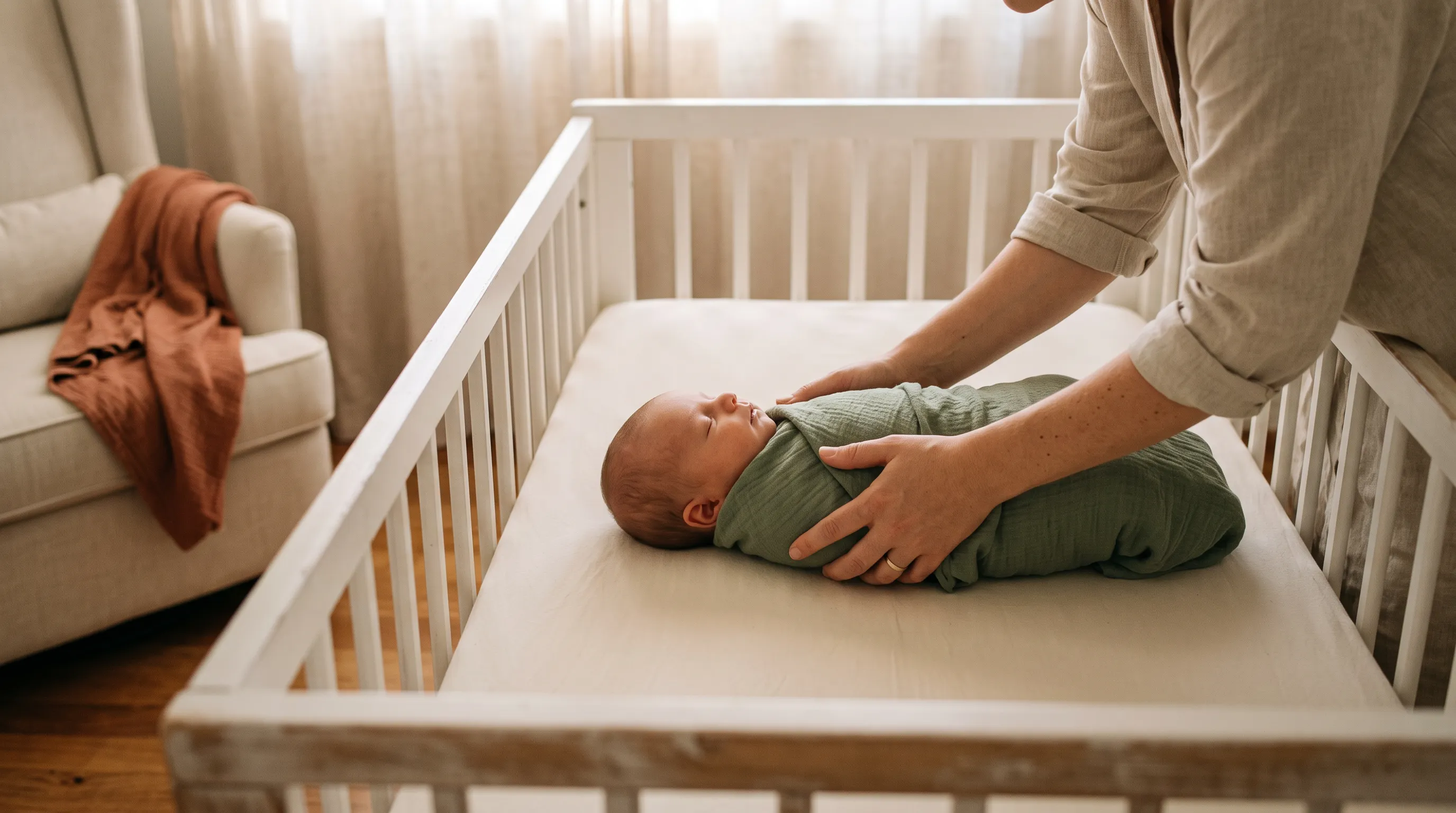
Is it OK to feed your baby to sleep? Yes. Feeding to sleep is normal, and Australian guidance says it doesn't create a bad habit. The Australian Breastfeeding Association calls breastfeeding to sleep "a common, helpful tool". Pregnancy, Birth and Baby says there is no evidence it stops babies learning other ways to settle.
If someone has told you you're "creating a habit", this guide sets out what four Australian sources actually say. Those sources are the Australian Breastfeeding Association (ABA), Pregnancy, Birth and Baby, Raising Children Network and Tresillian. They agree on more than family advice might suggest. Where they differ is on whether, and when, to change it later.
The guide also covers why newborns fall asleep at the breast or bottle, where feed, play, sleep fits in, gentle ways to change things if feeding to sleep stops working for you, and safe sleep after a feed.
Is it OK to feed your baby to sleep?
Yes. Feeding to sleep is one of the most common ways babies fall asleep, and Australian guidance says it won't give your baby bad habits. The one thing to get right is where your baby sleeps once the feed is over, which the safe sleep section below covers.
Pregnancy, Birth and Baby(opens in a new window) is direct about it:
Pregnancy, Birth and Baby · Getting your baby to sleepA breastfeed gives your baby food, comfort and helps them to relax. There is no evidence to suggest it will give them 'bad habits' or stop them being able to settle in other ways as they mature and their sleep needs change.
The Australian Breastfeeding Association(opens in a new window) says the same in fewer words: "Feeding your baby to sleep isn't a 'bad habit'." It adds that most babies naturally feed to sleep, even as they get older, and that this is normal and supported by research.
Bottle-fed babies fall asleep feeding too. Raising Children Network lists breastfeeding and bottle-feeding alike among the sleep habits a family can keep or change as they choose. With a bottle, hold your baby for the whole feed and never put them to bed with a bottle, as the Royal Children's Hospital Melbourne advises.
Why newborns fall asleep feeding
Newborns fall asleep feeding because a feed is warm, filling and calming, and because in the first weeks almost every sleep sits right next to a feed. Four things are going on at once.
- The feed itself makes babies sleepy. The ABA says breastfeeding releases a hormone called cholecystokinin (CCK) that makes babies sleepy. Young babies don't yet make their own melatonin, the sleep hormone, and get it through breastmilk.
- It meets several needs at once. The ABA describes breastfeeding to sleep as satisfying hunger and thirst, bringing comfort and helping babies relax.
- Feeds and sleeps come round every few hours. Raising Children Network(opens in a new window) says newborns sleep 14 to 17 hours in every 24, often in bursts of 2 to 3 hours, and usually need to feed every 2 to 3 hours. Pregnancy, Birth and Baby says babies under 3 months wake and feed at night the same way they do in the day.
- Babies fall asleep lightly. The ABA says babies start in active sleep, with faster, uneven breathing, and move into deeper sleep after about 20 minutes. A baby who drifted off at the breast can wake the moment you put them down.
That light first stretch explains why many babies wake straight after being put down. It doesn't mean anything is wrong. The ABA suggests holding your baby until they reach deeper sleep, about 20 minutes, then moving them to their cot or bassinet.
The ABA also says a top-up feed can help a baby who wakes soon after fall into a deeper sleep. Tresillian(opens in a new window) lists a top-up breastfeed within 30 minutes of the last feed among its ways to settle a newborn.
If the evening feeds run into one another, that may be cluster feeding, which is common in the early weeks.
Does feeding to sleep create a habit? What the guidance says
Feeding to sleep can become a sleep association, meaning your baby expects a feed to fall asleep, including after waking at night. Australian guidance treats that as normal unless it stops working for your family.
The four main Australian sources line up like this:
- ABA: Not a bad habit. It says, "Feeding your baby to sleep isn't a 'bad habit'." It gives no age for changing it. As babies grow, they learn to settle in other ways or with other people.
- Pregnancy, Birth & Baby: There is no evidence it causes bad habits. If it works for you both, it's fine to keep going. Past 6 months, if your baby only settles with a feed, it may be time to help them settle other ways.
- Raising Children: A sleep habit, but not one you need to phase out. Change it only if you want to. You can choose what works best for you and your child.
- Tresillian: A sleep association your baby will expect each time. Some babies start settling themselves back to sleep after 3 months. Tresillian's self-settling tips are for when your baby is ready.
So the sources agree that feeding to sleep is normal. They differ in wording. The ABA and Pregnancy, Birth and Baby stress that it causes no harm. Raising Children Network and Tresillian describe it as a sleep habit or association that a family can keep or change.
Pregnancy, Birth and Baby(opens in a new window) explains what "sleep association" means in practice. It says some children expect the same conditions each time they fall asleep. A baby who always feeds to sleep may find it harder to fall back to sleep after a night waking without a feed.
The same page says it's normal, especially in the first year, for babies to need help falling asleep and getting back to sleep.
In the newborn months, feeding to sleep is one of the main ways young babies fall asleep, and it needs no fixing.
None of the four sources sets a deadline. Pregnancy, Birth and Baby's night feeding page(opens in a new window) puts it this way: feeding overnight is only a problem if parents would prefer their baby learns other ways of settling.
Where feed, play, sleep fits in
Feed, play, sleep is a loose daytime order for newborns, and it sits alongside feeding to sleep. Raising Children Network says a very simple, flexible feed, play and sleep routine may help, and that this isn't the time to worry about any kind of strict routine.
A newborn version from Raising Children Network looks like this:
- Offer your baby a feed when they wake up.
- Change their nappy.
- Talk, play and cuddle.
- Put your baby back down for sleep.
The same page says to keep watching your baby rather than the order. If your baby shows tired signs soon after a feed, it's time for sleep, even with little play.
If they seem hungry after play, give another feed before settling, because "your baby will sleep better with a full tummy". At night, settling your baby straight back to sleep after a feed may be best, rather than trying to play.
Tresillian's newborn routines(opens in a new window) give the awake times. At 4 to 6 weeks, the average awake time is 1 to 2 hours, and that includes the feed. At 7 to 12 weeks, it's 1 to 2.5 hours. Tresillian says a day-night pattern emerges at around 4 weeks. Our newborn sleep guide has wake windows by age. For how often newborns feed through the day and night, see our newborn feeding schedule.
In practice, the two sit side by side. Pregnancy, Birth and Baby says it's normal for breastfed babies to fall asleep feeding, especially at night, and that it can be a good idea to feed a young baby after they wake rather than when they're tired. If your baby still drifts off at a daytime feed, that's fine too.
When feeding to sleep may change
Most babies don't need to stop feeding to sleep in the newborn months. Australian guidance links the change to about 3 to 6 months, when many babies start sleeping longer and learning to settle themselves.
- Birth to 3 months: Babies wake and feed at night the same way as in the day (Pregnancy, Birth and Baby). Very young babies might need to fall asleep in your arms before you can put them down (Pregnancy, Birth and Baby).
- About 3 months: Many babies move to longer awake times in the day and a 4 to 5 hour sleep at night (Pregnancy, Birth and Baby). Some start settling themselves back to sleep after waking (Tresillian).
- 4 to 6 months: Babies typically start working out how to fall asleep by themselves (Pregnancy, Birth and Baby).
- 6 months and over: If your baby only settles with a feed, it may be time to support other ways to settle (Pregnancy, Birth and Baby).
Three situations can make a family want to change it:
- Every waking needs a feed. Raising Children Network notes that some babies need their sleep habit only at the start of the night, while others also need it after waking during the night.
- Only one person can settle the baby. If breastfeeding is the only way your baby falls asleep, the breastfeeding parent does every settle.
- You're running on empty. Raising Children Network notes that a change which helps your baby sleep can also help you get more sleep.
If none of these applies, there's no reason to change anything. For how night feeds change over the first year, see night feeds by age. If you're thinking about a late-evening feed to stretch the first sleep, see dream feeding.
How to stop feeding to sleep gently
To stop feeding to sleep gently, keep the feed but move it away from the moment your baby falls asleep: feed a little earlier, unlatch or remove the bottle while your baby is drowsy, then settle them another way. These steps come from Raising Children Network, Pregnancy, Birth and Baby and Tresillian.
- Start with daytime sleeps. Pregnancy, Birth and Baby suggests gentle changes to daytime settling so your baby learns some different ways to settle.
- Move the feed earlier. Raising Children Network says feeding earlier, so the feed isn't part of the bedtime routine, can reduce overnight feeding.
- Take your baby off the breast or bottle before they fall asleep. Raising Children Network(opens in a new window) suggests this for the start of the night and after night wakings. Then hold your baby and pat, rock or stroke them until they're calm, as Pregnancy, Birth and Baby suggests.
- Try hands-on settling in the cot. Tresillian and Pregnancy, Birth and Baby describe it like this. Put your baby on their back in the cot, awake but calm or drowsy. Comfort them with gentle "ssshhh" sounds and rhythmic patting until they're calm or asleep. If they get upset, pick them up for a cuddle, then try again. Pregnancy, Birth and Baby says babies up to 6 months may respond best to this method.
- Let someone else settle some sleeps. The ABA(opens in a new window) says babies learn to settle in other ways or with other people as they grow. A partner or family member settling a nap gives your baby a way to fall asleep without a feed.
- At night, soothe first if the last feed was recent. Pregnancy, Birth and Baby suggests seeing whether your baby will resettle without a feed when they fed not long before and you're confident they aren't hungry. In the newborn months, feed a hungry baby.
Expect some protest. Raising Children Network says most babies cry while they get used to a new way of going to sleep, and a change can take anywhere from 3 days to 3 weeks.
Tresillian(opens in a new window) uses responsive settling, and its 3 to 6 month sleep page(opens in a new window) says it does not recommend or use controlled crying. Pregnancy, Birth and Baby says comfort settling and camping out (sitting gradually further from the cot) are for babies 6 months and older.
Before you change anything, it helps to know how each sleep actually starts, which a sleep diary shows. BabyLog's free feed and sleep logs put every feed and every sleep on one timeline, so you can see which sleeps began straight after a feed, and you can start free in your phone's browser.
Safe sleep after a feed
When your baby falls asleep feeding, move them onto their back in their own cot or bassinet, in the same room as you. Red Nose Australia(opens in a new window) says: "If baby falls asleep in your arms, gently transfer them to their own cot or bassinet."
Red Nose Australia's six safe sleep recommendations(opens in a new window) apply to every sleep, including the drowsy one after a feed:
- Always place your baby on their back to sleep.
- Keep your baby's head and face uncovered.
- Keep your baby smoke free, before and after birth.
- Provide a safe sleeping environment, night and day.
- Sleep your baby in their own safe sleep space in the same room as you for at least the first 6 months.
- Breastfeed your baby, if possible.
Night feeds bring two extra risks for a tired parent:
- Falling asleep while feeding. Red Nose says never to sleep with your baby on a sofa, armchair or recliner, no matter how tired you are. If you feel yourself drifting off, put your baby down in their own safe sleep space first. That includes feeding lying down in your own bed: move your baby back to their own cot or bassinet before you doze.
- A bottle left with your baby. The Royal Children's Hospital Melbourne(opens in a new window) says to always hold your baby while they feed, and never leave them alone with the bottle or put them to bed with one.
Our newborn sleep guide covers safe sleep in more detail.
- Call 000: If you think your baby needs urgent medical help.
- See your GP or child health nurse soon: If your newborn is very sleepy or hard to wake for feeds, is feeding poorly, has fewer wet nappies than usual, or isn't gaining weight. The Australian Breastfeeding Association(opens in a new window) says lots of wet nappies, regular poos and increasing alertness are signs your baby is getting enough milk.
- Talk to your child and family health nurse or GP: If settling is wearing you down, or if you're worried about how your baby is feeding or sleeping. Raising Children Network says your nurse can refer you to an early parenting centre.
- Helplines: You can call Pregnancy, Birth and Baby on 1800 882 436 to talk to a maternal child health nurse. The Australian Breastfeeding Association helpline is 1800 686 268. The Red Nose Safe Sleep Advice Line is 1300 998 698.
Common questions
Ready to start tracking?
BabyLog works on any device — iPhone, Android, tablet, or desktop. Setup takes two minutes.
Keep reading

Cluster Feeding & the Witching Hour: What's Normal
Why your newborn wants to feed non-stop in the evening, whether cluster feeding means low supply (it usually doesn't), and how to get through the witching hour. Based on Australian health guidance.

Night Feeds by Age: How Many Are Typical and When Babies Drop Them
How many night feeds are typical from newborn to toddler, when babies naturally need fewer, and why it is a need rather than a habit to break.