
When Does Your Milk Come In? Days 2 to 5, and the Nappy Signs That Tell You
When does milk come in? Usually between day 2 and day 5. The signs in your breasts and your baby's nappies, and when to call your midwife.
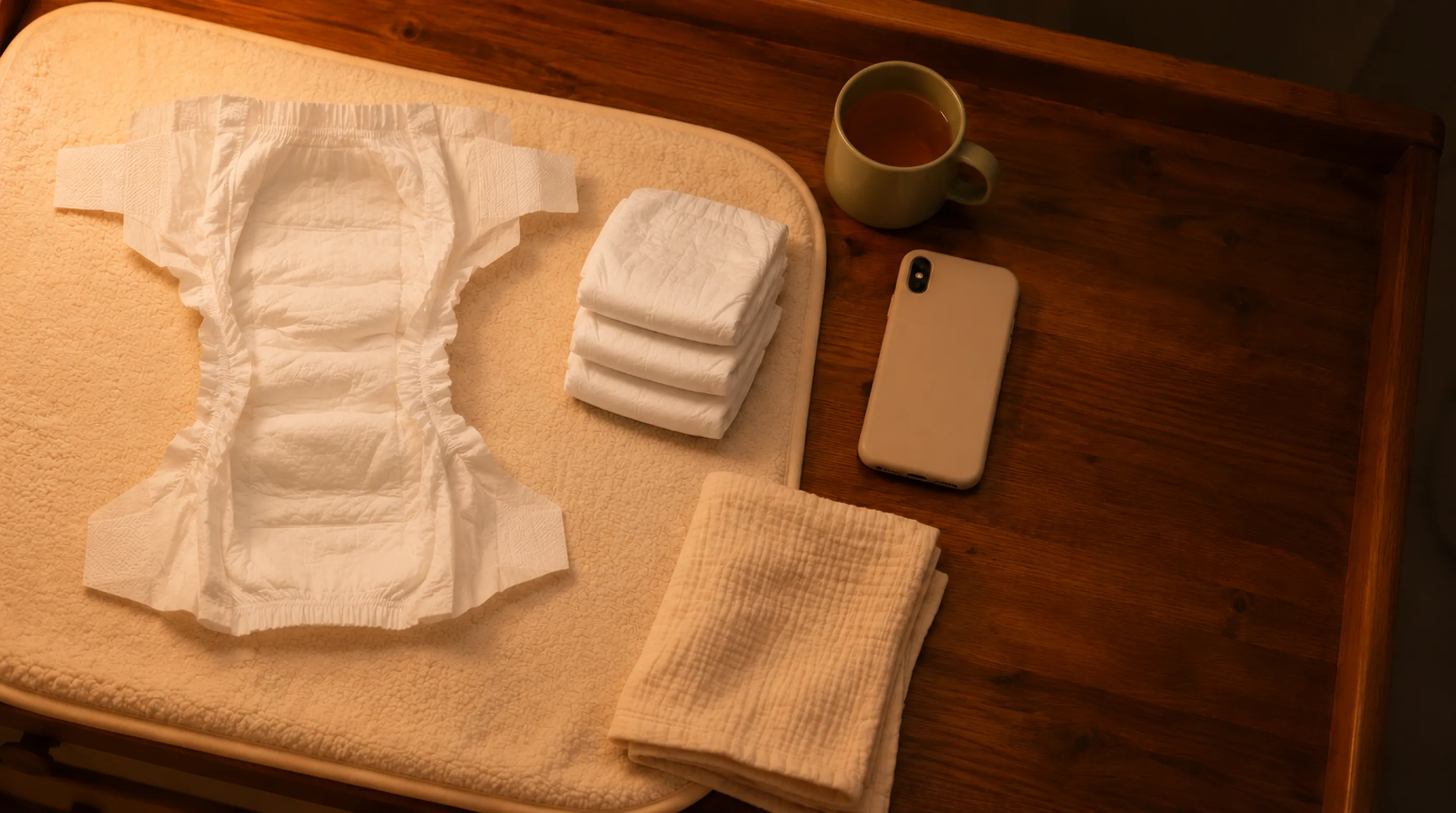
When does milk come in? For most mums, somewhere between day 2 and day 5 after birth, and a first baby often takes the full 4 days. Breast fullness varies and the change can be gradual, so your baby's nappies are the clearer sign: wet nappies climb day by day, and poo turns from black to mustard yellow.
If you're reading this on day 3 with a baby who has fed for most of the night, that's a very normal place to be. The days before your milk comes in are short on sleep and long on questions.
Colostrum first: days 1 and 2
You make milk from the start, and the first milk is colostrum, which is thick, yellow and small in volume. Pregnancy, Birth and Baby says you only make a small amount, and that this suits your baby because their tummy is very small. The Australian Breastfeeding Association(opens in a new window) (ABA) compares a newborn's stomach to a 5 mL marble.
Colostrum is rich in protein and antibodies, and it helps your baby pass their first sticky poo.
How often? Pregnancy, Birth and Baby(opens in a new window) says a newborn may feed 8 to 12 times or more in the first 24 hours, sometimes every hour. For typical amounts per feed in the first days, see our guide to newborn feeding amounts.
The NHMRC Infant Feeding Guidelines say you make colostrum for the first 30 to 40 hours. Around then, the pregnancy hormone progesterone has dropped after the placenta is delivered, and milk production speeds up sharply.
The NHMRC puts the milk "coming in" at about 48 to 72 hours, which is when most mums notice it. The ABA says the change from colostrum to mature milk can be gradual.
Signs your milk has come in
Your milk has usually come in when your breasts feel fuller and heavier and your baby starts having more wet and dirty nappies. The ABA lists both signs. Here is what you might notice:
- Your breasts change. They may get larger, heavier and warmer, and they can feel a bit uncomfortable.
- The milk looks different. If you leak or express, the ABA says the milk turns thinner and bluish-white as the volume grows.
- The nappies change. More wees, heavier nappies, and poo moving from black towards yellow. This is the sign you can count.
The NHMRC points out that milk "coming in" does not mean your baby suddenly drinks a lot more. Intake builds over the following days. So if your breasts feel full but feeds look the same, that's expected.
The nappy signs, day by day
Wet nappies rise from at least 1 on day 1 to at least 5 wet disposables (or 6 very wet cloth nappies) a day from day 5, and poo changes colour over the same days. These counts come from the ABA's first-week guide(opens in a new window) for a baby having only breastmilk.
| Day | Wet nappies (at least) | Poo |
|---|---|---|
| Day 1 | 1 | Black and sticky (meconium) |
| Day 2 | 2 | Softer, still dark |
| Day 3 | 3 | Greenish-brown, then turning yellow |
| Day 4 | 4 | Greenish-brown, then turning yellow |
| Day 5 on | 5 wet (or 6 very wet cloth) | Soft, yellow-mustard |
The NHMRC says the black meconium changes after 24 to 48 hours, and by day 3 or 4 most breastfed babies have loose, mustard-yellow poos. The ABA adds that breastfed babies under 6 to 8 weeks usually have 3 or more runny poos a day.
A rusty, orange-red stain in the nappy over the first few days is usually urate salts in the wee. The ABA says to check with your doctor if you see it after day 4.
For the full by-age count and what a heavy nappy feels like, see how many wet nappies a day. Our baby poo colour chart covers every shade, and the printable first-week chart puts these numbers on one page.
Nappies are one sign among several. For the others, such as weight gain, see the signs of enough milk in our guide to how much milk a baby drinks.
Jaundice tends to show up in the same window. Pregnancy, Birth and Baby says it often appears 2 to 4 days after birth, and our guide to newborn jaundice and feeding explains how the two connect.
Feeding constantly on day 2 or 3
Very frequent feeding before your milk comes in is common, and it helps. The NHMRC is direct about it:
NHMRC · Infant Feeding GuidelinesIt is common for infants to want to feed frequently before the milk comes in, particularly in the second 24 hours.
The same guidelines say frequent feeds help stimulate your milk supply and make engorgement less likely. Skin-to-skin time helps too. The ABA says newborns commonly breastfeed 8 to 14 times or more in 24 hours in the first week.
None of this makes 3am easier. It does mean a baby who wants the breast again 40 minutes after the last feed is usually doing their job. If the evenings turn into back-to-back feeds, our guide to cluster feeding and the witching hour explains what's going on.
Wondering when your partner can take a feed with a bottle? That's a separate question with its own timing, covered in introducing a bottle to a breastfed baby.
Full, hard breasts
Full, heavy breasts are normal when your milk comes in, and they can tip into engorgement. The ABA(opens in a new window) describes engorged breasts as hard, swollen and tender, usually in both breasts at once. The milk may not flow well, and flattened nipples can make it harder for your baby to attach.
The ABA says engorgement usually doesn't last long. Its engorgement page and Pregnancy, Birth and Baby(opens in a new window) both list ways to ease it. If it's severe and those tips don't help, ask your midwife or a lactation consultant. The signs that need a doctor are in the help section below.
When milk is slow to come in
For some mums the milk takes longer, and the ABA says to get help early. The ABA lists(opens in a new window) things that can slow the increase:
- being a first-time mum
- an exhausting or traumatic birth
- being separated from your baby after birth
- recovering from pain or complications
- retained placenta
- health conditions such as diabetes or thyroid disease
Pregnancy, Birth and Baby says a caesarean may cause a slight delay too. A delay doesn't mean you can't breastfeed.
What helps, from the ABA: lots of skin-to-skin, offering the breast whenever your baby seems ready, and help with attachment so your baby removes milk well.
If your baby can't feed at the breast yet, you can express colostrum and give it to them. The NHMRC notes that getting milk out of the breasts in the first 3 days matters for establishing supply.
If your midwife suggests top-ups, our guide to top-ups and triple feeding explains how they work.
Breastfeeding Helpline: 1800 686 268, 24 hours a day, 7 days a week. A trained ABA breastfeeding counsellor can talk through slow milk, attachment and engorgement. Your midwife, a lactation consultant or your child health nurse can help too.
When to call your midwife, GP or 000
Trust your gut in these first days, and ask if something feels wrong. Australian health sources name these points:
- Fewer wet nappies than the day's minimum in the table, or dark, smelly wee: the ABA says dark, smelly wee is a sign your baby isn't taking in enough milk. Pregnancy, Birth and Baby says to see your doctor if your baby is weeing a lot less than usual.
- No wet nappy for 4 to 6 hours once your milk is in, or in an unwell baby: Pregnancy, Birth and Baby says to see a doctor right away or go to an emergency department. Before your milk comes in, the NHMRC says one wee or more in 24 hours is generally no cause for concern.
- Signs of severe dehydration: no tears when crying, a fast heart rate or a sunken fontanelle (the soft spot on the head). Pregnancy, Birth and Baby says to call 000 or go to the nearest emergency department.
- A rusty orange-red stain after day 4: check with your doctor, says the ABA.
- Yellow skin in the first 24 hours after birth: Pregnancy, Birth and Baby says to call 000 or go to the nearest hospital.
- Yellow skin or eyes after the first day: Pregnancy, Birth and Baby says any newborn with jaundice should be checked by a midwife or doctor. Get emergency care if the jaundice comes with a fever of 38°C or higher, pale poo or dark wee.
- Milk still not in by day 5 or 6: the ABA suggests asking to see a lactation consultant, alongside your midwife or doctor.
- A fever, feeling unwell, or a red, tender area or lump in one breast: see your doctor, says Pregnancy, Birth and Baby.
For advice any time, the ABA Breastfeeding Helpline is on 1800 686 268. Pregnancy, Birth and Baby's maternal child health nurses are on 1800 882 436, 7am to midnight AET. In an emergency, call 000.
Seeing the change day by day
The answer to "has my milk come in?" usually shows up in the nappies over the next 48 hours. Writing each change down lets you see wees climbing towards 5 a day and poo moving from tar-black to mustard. On day 3, after two nights of broken sleep, that's hard to hold in your head.
BabyLog does this on your phone for free. The nappy log records each wee or poo, with a colour picker that includes tar and mustard. Today at a glance shows today's wee and poo counts, and you can start free tonight in your phone's browser.
Our guide to the first week with a newborn covers the rest of what's coming. The log keeps the counts for your own records, ready to show your midwife or child health nurse.
Common questions
Ready to start tracking?
BabyLog works on any device — iPhone, Android, tablet, or desktop. Setup takes two minutes.
Keep reading

How Many Wet Nappies a Day? A By-Age Guide for Parenting in Australia
At least five heavy wet nappies a day once feeding is established. The by-age counts, what a heavy nappy feels like, and the dehydration red flags.

Newborn Cluster Feeding & the Witching Hour: What's Normal
Newborn cluster feeding: why your baby wants back-to-back evening feeds, the weeks it may ramp up, whether it means low supply and how to cope.